


Flat slab reporting software is developed based on the experience of LPC engineers in implementing calculations for flat slab without beams projects in Vietnam. After being applied to numerous developers, design contractors, and clients, the software has demonstrated many outstanding advantages. In this article, let us explore the basic indicators in LPC's flat slab reporting software.
What Is Flat Slab Reporting Software?
Flat slab reporting software is a useful tool that helps developers and construction contractors quantify the value and construction costs of flat slabs and compare their efficiency with conventional slabs. The software was developed by ParisTechno – a technology company with experience in developing technical calculation platforms – and LPC, with 13 years of experience in implementing and designing flat slabs without beams.

By entering data for the basic indicators in flat slab design, the software calculates and displays the quantities of materials required, such as cement, sand, and steel. It also provides the total construction value of the entire project.
With flat slab reporting software, managing and quantifying a project's construction budget becomes more convenient and accurate. This helps ensure construction quality and eliminate unnecessary costs.
Register for free flat slab reporting software here
3 Basic Indicators in Flat Slab Reporting Software
To ensure the most accurate calculation of the parameters, the flat slab reporting software lists the basic material indicators and requires users to enter this information into the system to obtain the most accurate results.
Formwork
Formwork, also known as concrete formwork, originates from the French word Coffrage and is called Formwork in English. It refers to a mold used to shape concrete and can be made from various materials such as iron, steel, wood, and others.
The main function of formwork is to serve as a mold for containing concrete and shaping it. It also acts as a load-bearing and supporting structure while fresh concrete has not yet hardened.
Formwork is generally divided into two types:
- Column formwork: Used to create molds for columns during concrete placement. It can take various shapes, such as round, square, or triangular.
- Slab formwork: Also referred to as beam formwork, it is a three-sided box-shaped formwork system for foundation beams. When the required conditions of air temperature, humidity, and processing time are met, it can be removed. It is combined with the formwork support system, beams, and purlins for concrete placement in slabs, beams, and columns.
Requirements for Using Formwork in Construction
- It must be sufficiently tight to contain fresh, fluid concrete inside.
- The shape, dimensions, and installation position of the formwork must comply with the formwork design, ensuring that the concrete structure is constructed with the required shape and dimensions.
- Formwork must maintain its shape throughout the formation of a durable concrete structure.
- Formwork must be capable of bearing loads in place of concrete while it is in a liquid state. The formwork may only be removed after the concrete has hardened and achieved sufficient load-bearing capacity.
- Formwork should be designed and manufactured for easy assembly and removal.
- Good-quality formwork materials should be used so that they can be reused multiple times.
For the Ubot long-span flat slab technology solution, LPC generally recommends using conventional shoring systems, with slab formwork made of film-faced plywood.
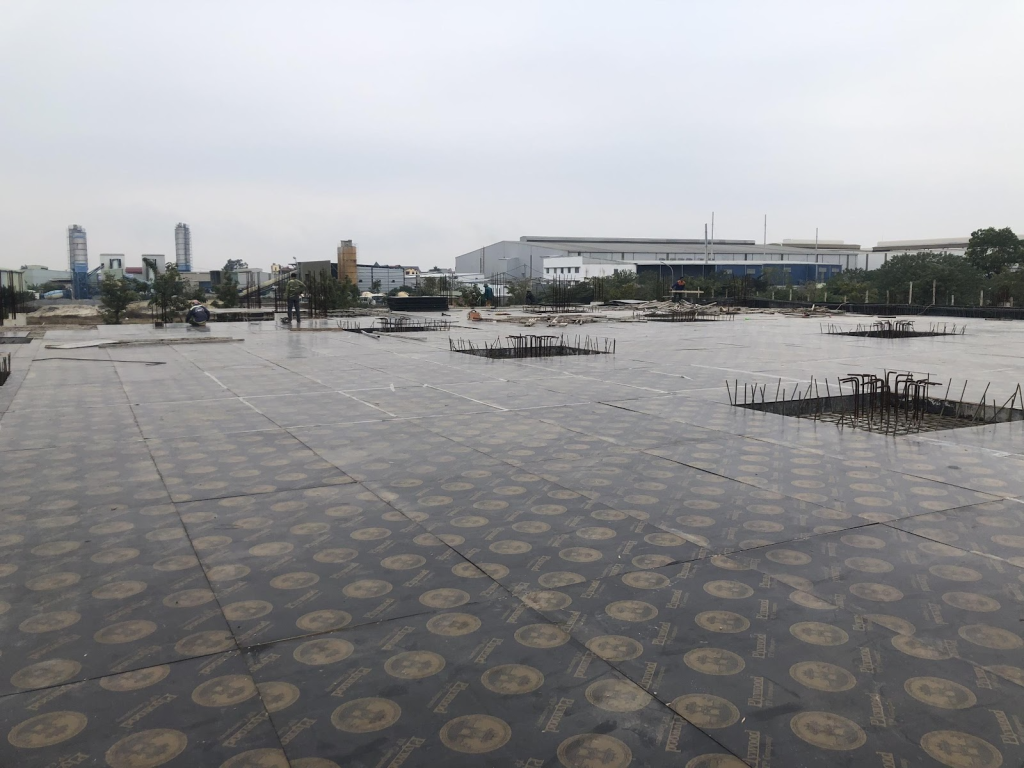
In terms of composition and structure, film-faced plywood formwork consists of the following basic components: wood, adhesive, flour, film, moisture-resistant agents, preservatives, termite protection, paint, and others.
Advantages:
- Creates a flat surface and a high-quality finished concrete surface that can be put into use without requiring primer or additional treatment, making it suitable for flat slab without beams solutions. It is also compatible with the formwork indicators in the flat slab reporting software.
- Film-faced plywood formwork is suitable for projects ranging from residential buildings to high-rise buildings, infrastructure projects, bridges, and culverts.
- It is an economical solution in terms of material costs for concrete slab construction using film-faced plywood.
- Its lightweight nature makes it easy to transport during installation or move to other projects.
- Its durability varies from 1–2 uses to 8–20 uses, helping contractors optimize costs.
Concrete Grade in Flat Slab Reporting Software
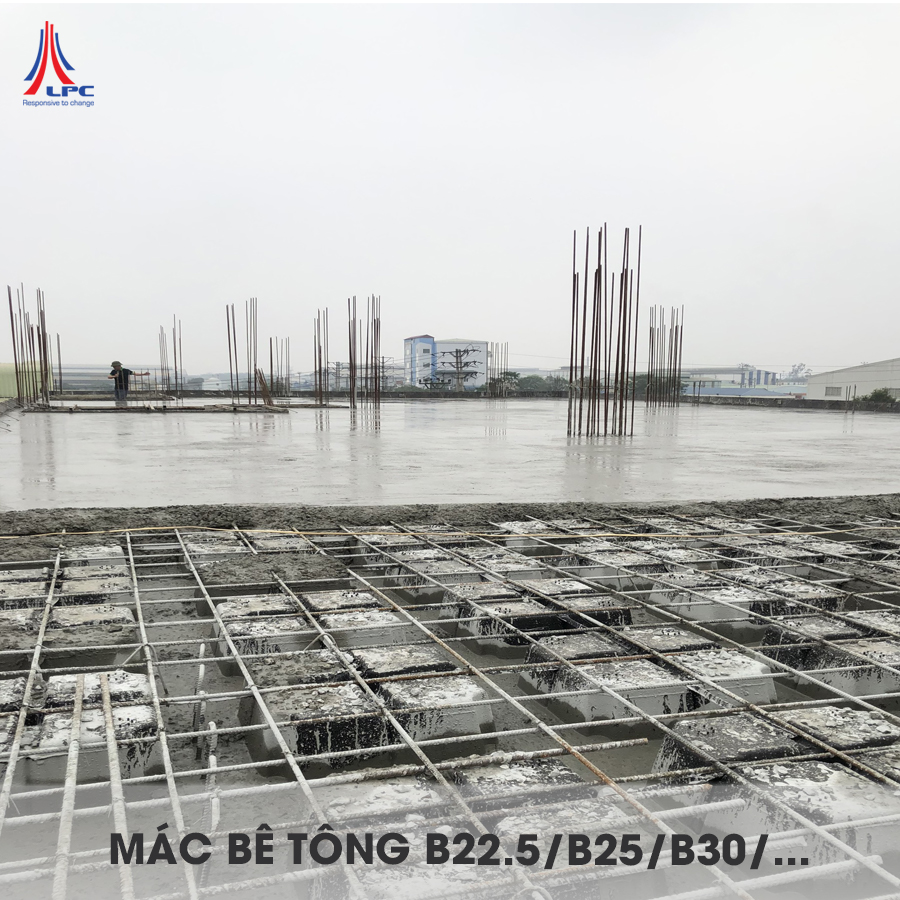
Concrete grade is a designation for concrete according to Vietnamese standards. It refers to the compressive strength of 15 × 15 × 15 cm cubic concrete specimens maintained under standard conditions for 28 days. The unit of measurement is kg/cm².
For flat slab solutions, the flat slab reporting software can be applied to projects ranging from short-span residential buildings with thin slabs to long-span, heavily loaded structures such as factories and shopping centers. The concrete grades commonly used for flat slab solutions include B22.5, B25, B30, and so on, with 1 × 2 cm aggregate grading.
Concrete slump refers to the workability and flowability of concrete. Slump depends on the concrete placement method, such as boom pumping or stationary pumping, as well as whether it is used for foundations or columns. The ideal slump for concrete used in flat slab solutions is 18 ± 2 cm.
Steel Grade
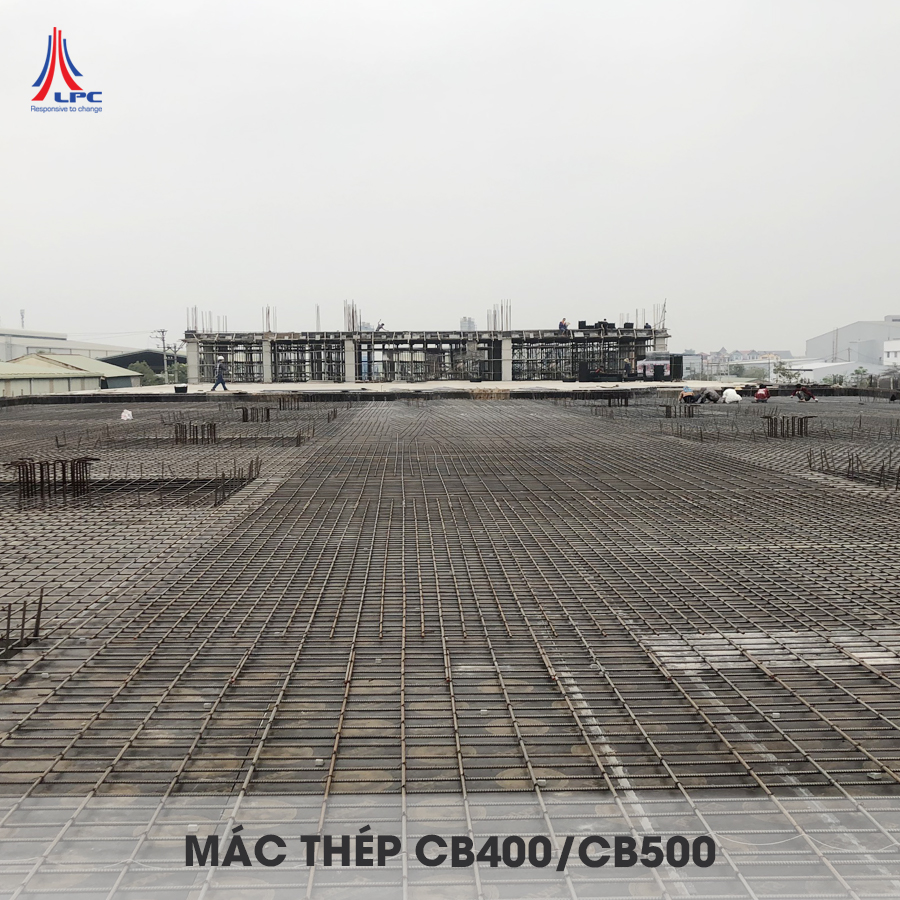
Steel grade in flat slab reporting software is a technical term used to indicate the load-bearing capacity of steel in the software. In other words, steel grade refers to the load-bearing capacity of steel. It indicates how much load a particular steel product can withstand.
Common steel grades frequently used in construction include: SD 295, SD 390, Gr60, Grade460, SD490, SD295, SD390, CB300-V, CB400-V, CB500-V.
Steel grades are also manufactured according to specific standards: TCVN 1651-1985 (Vietnam), TCVN 1651-2008 (Vietnam), JIS G3112 (1987) (Japan), JIS G3112–2004 (Japan), A615/A615M-04b (USA), and BS 4449–1997 (UK). The two most commonly used types are SD and CB.
- SD: You may often hear steel referred to as SD295, SD390, or SD490. These are designations according to Japanese standards. The number that follows indicates the strength of the steel, technically referred to as the yield strength of the steel.
For example, SD240 means that the steel has a strength of 240 N/mm².
- CB: CB is a designation indicating the “strength grade” of steel. C stands for grade, while B stands for strength. This designation follows Vietnamese standards. The number that follows (300, 400, 500, etc.) indicates the strength of the steel, technically referred to as its yield strength.
For example, CB300 means that the steel has a strength of 300 N/mm². This means that if a steel bar has a cross-sectional area of 1 mm², it can withstand a tensile or compressive force of approximately 240 N (24 kg).
LPC's drawings generally use steel grades according to TCVN. The two most commonly used grades are CB400 and CB500 for steel bars with diameters of 10 mm and above, while CB240 steel is used for bars with diameters below 10 mm.
Formwork, concrete grade, and steel grade are the basic indicators displayed in the flat slab reporting software, and developers are required to enter this information accurately. Other indicators in the flat slab reporting software vary proportionally based on the calculation formulas developed by LPC engineers.
We hope the information above provides you with additional knowledge to use the flat slab reporting software effectively.
Read more: Ubot Flat Slab Without Beams Solution
—- Lam Pham Construction Co., Ltd. – LPC
Hotline: 0911.29.9696
Website: https://lpc.vn
Facebook: Lam Pham Construction
Youtube: Lam Pham Construction
Tiktok: Lam Pham Construction
More articles
All news


Have a project in mind?
LPC engineers are ready to share their experience and propose the right solution for your project.