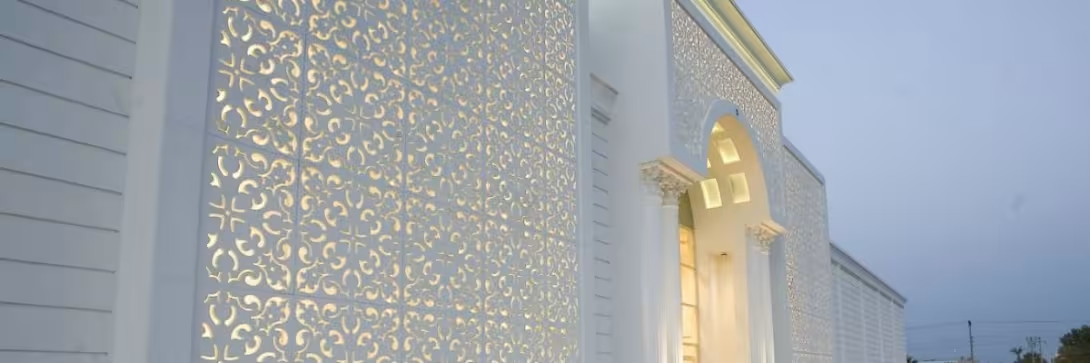
GRC glass fiber reinforced concrete is increasingly becoming a preferred choice in modern construction and architecture. As environmental considerations become increasingly important, this material stands out not only for its design flexibility but also for its outstanding advantages over traditional types of concrete. Let’s learn more about this material with LPC!
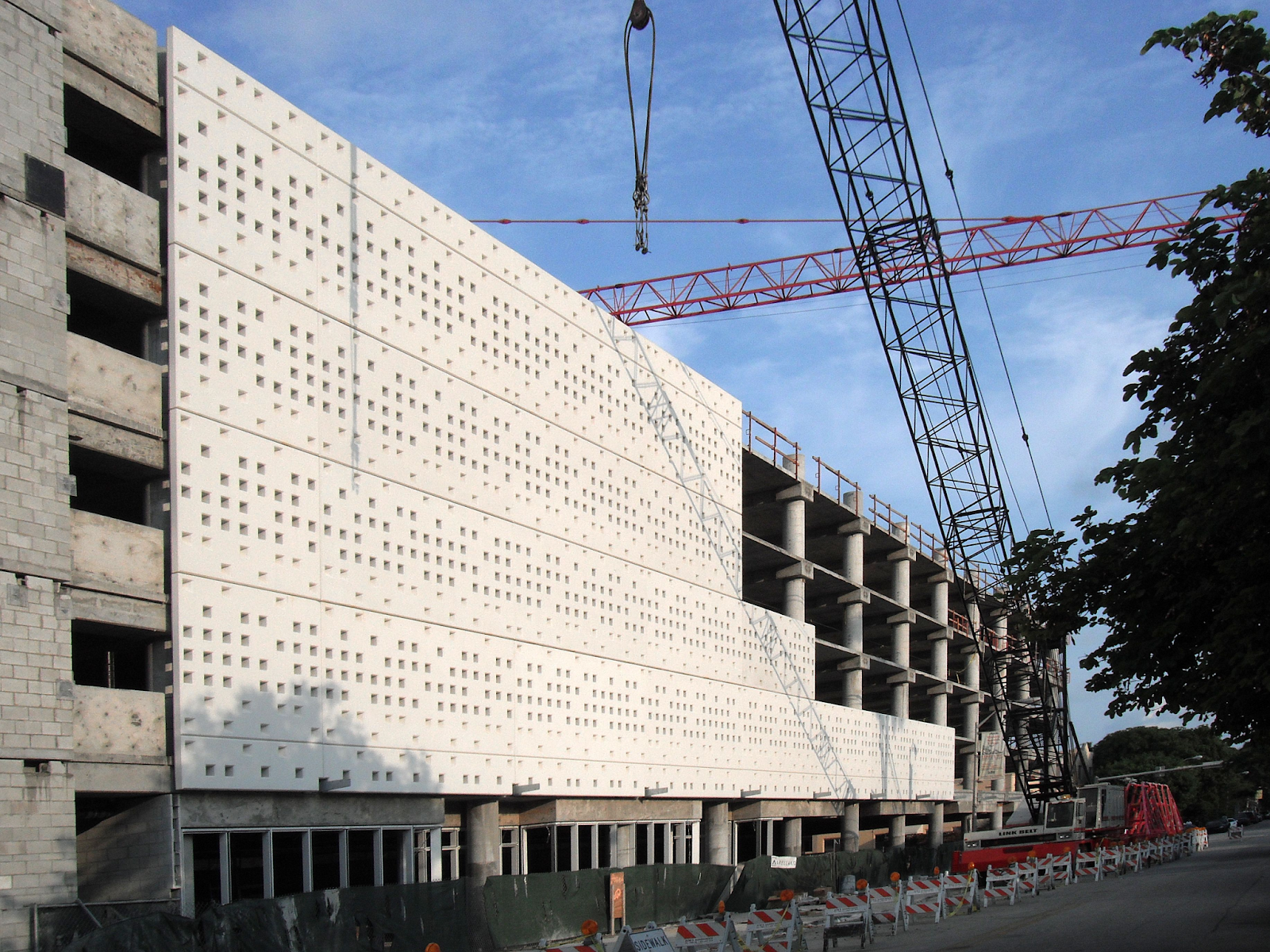
What Is Glass Fiber Reinforced Concrete? Applications of GRC
Glass fiber reinforced concrete, also known as GRC (Glass Fiber Reinforced Concrete), is a special type of construction material created by combining concrete with glass fibers. GRC produces a high-strength and flexible composite that offers many advantages over traditional concrete.
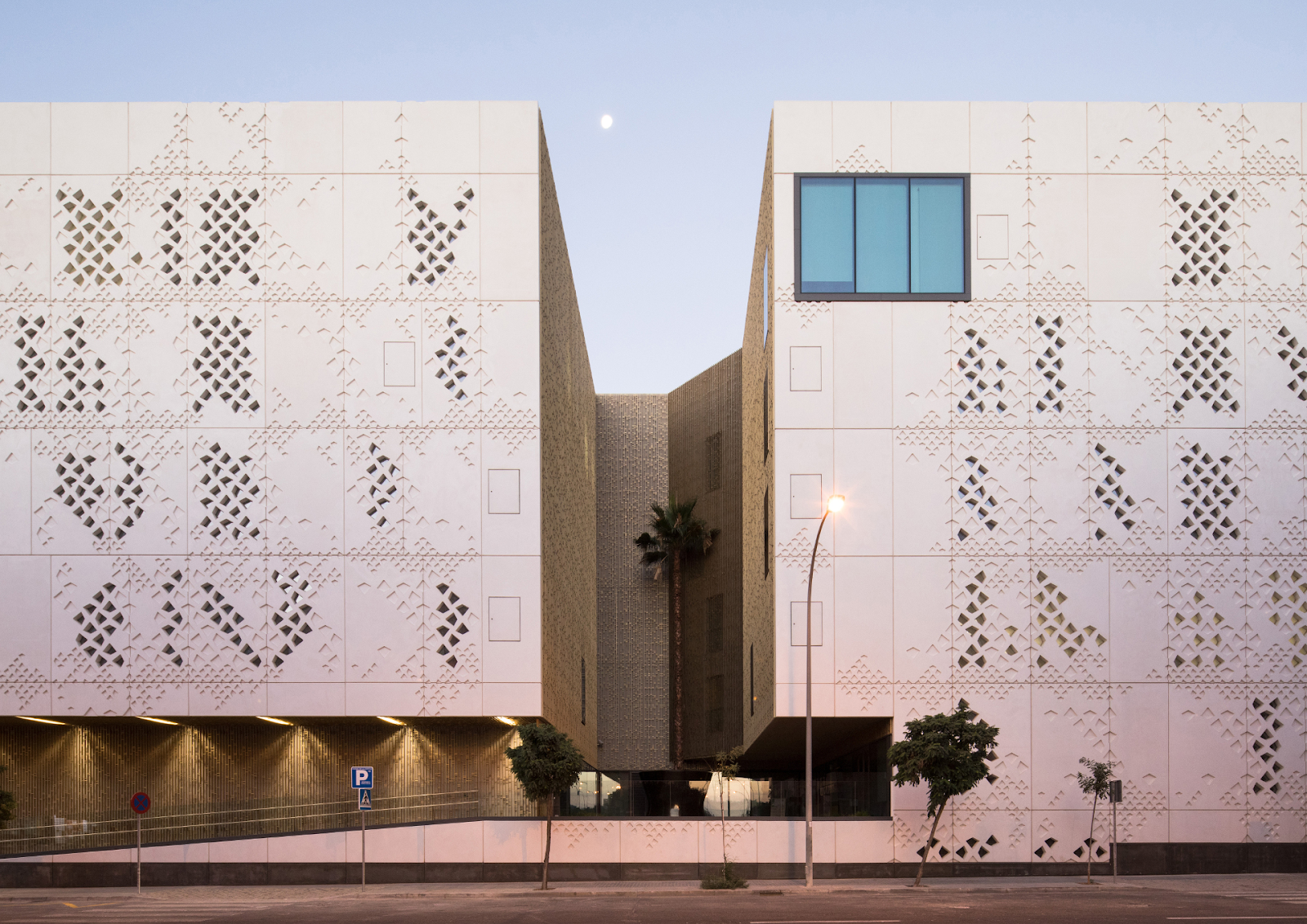
GRC can be used to manufacture architectural products such as wall panels, window surrounds, column casings, ceilings, brackets, railings, canopies, domes, construction-site fixtures, and more.
When Was GRC Developed?
The history of glass fiber reinforced concrete originated in Russia, where the use of glass fibers to reinforce concrete was first documented. However, the initial application of glass fibers encountered problems because they quickly deteriorated under the effects of highly alkaline Portland cement. This prompted research and the development of alkali-resistant glass fiber reinforced concrete in the United Kingdom and other countries.
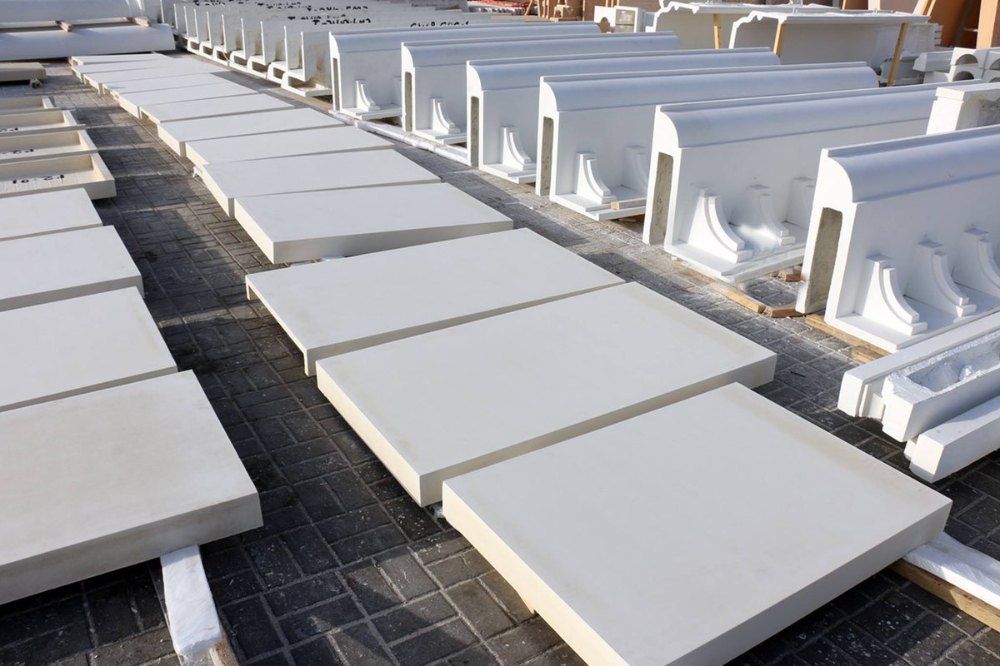
By 1940, GFRC had been developed, but it quickly faced setbacks due to the deterioration of glass in an alkaline environment. By 1970, Owens-Corning and Nippon Electric Glass had successfully developed alkali-resistant glass fibers, opening the door to rapid advances in the production of GFRC as we know it today.
See also: GRC Glass Fiber Reinforced Concrete and Its Excellent Applications in Modern Architecture
Advantages of GFRC
- Relatively lightweight compared with traditional stone or terracotta materials. The manufacturing process is fast and relatively easy. With a weight of only 75% that of traditional concrete, GRC not only reduces the structural load but also lowers transportation costs and facilitates installation.
- Compressive strength of up to 80 MPa and flexural strength of 20–30 MPa, combined with a high strength-to-weight ratio, make GRC an excellent choice for projects with demanding technical requirements.
- Through molding or spraying processes, GRC can easily be formed into products with a wide range of shapes, including complex designs such as angular, curved, and wavy forms. This makes it suitable for architectural applications requiring high precision and intricate detailing.
- GRC is not only resistant to surface cracking and water penetration but is also resistant to environmental factors. This durability is optimized through the use of low-alkali cement and pozzolanic additives.
See also: GRC with a Pre-Installed Frame Ready for Palletization
Methods for Producing GRC
Methods for producing GRC
The glass fibers used in GFRC provide greater strength to the composite. Alkali-resistant fibers act as the primary tensile load-bearing component, while the polymer and concrete matrix bonds the fibers together. Without fibers, GRC would lack strength and be more prone to breaking and cracking.
There are many methods for producing GRC glass fiber reinforced concrete, but below are two common methods introduced by LPC:
1. Spray
The spray-applied GRC process involves spraying a liquid concrete mixture into a mold. This process uses a specialized spray gun to apply the liquid concrete mixture while simultaneously cutting and spraying long glass fibers from a continuous roving. Spray-applied GRC produces a highly durable product due to its high fiber content and long fiber length, but the equipment can be expensive to purchase. Spray-applied GRC is generally stronger than premixed, vibration-cast GRC.
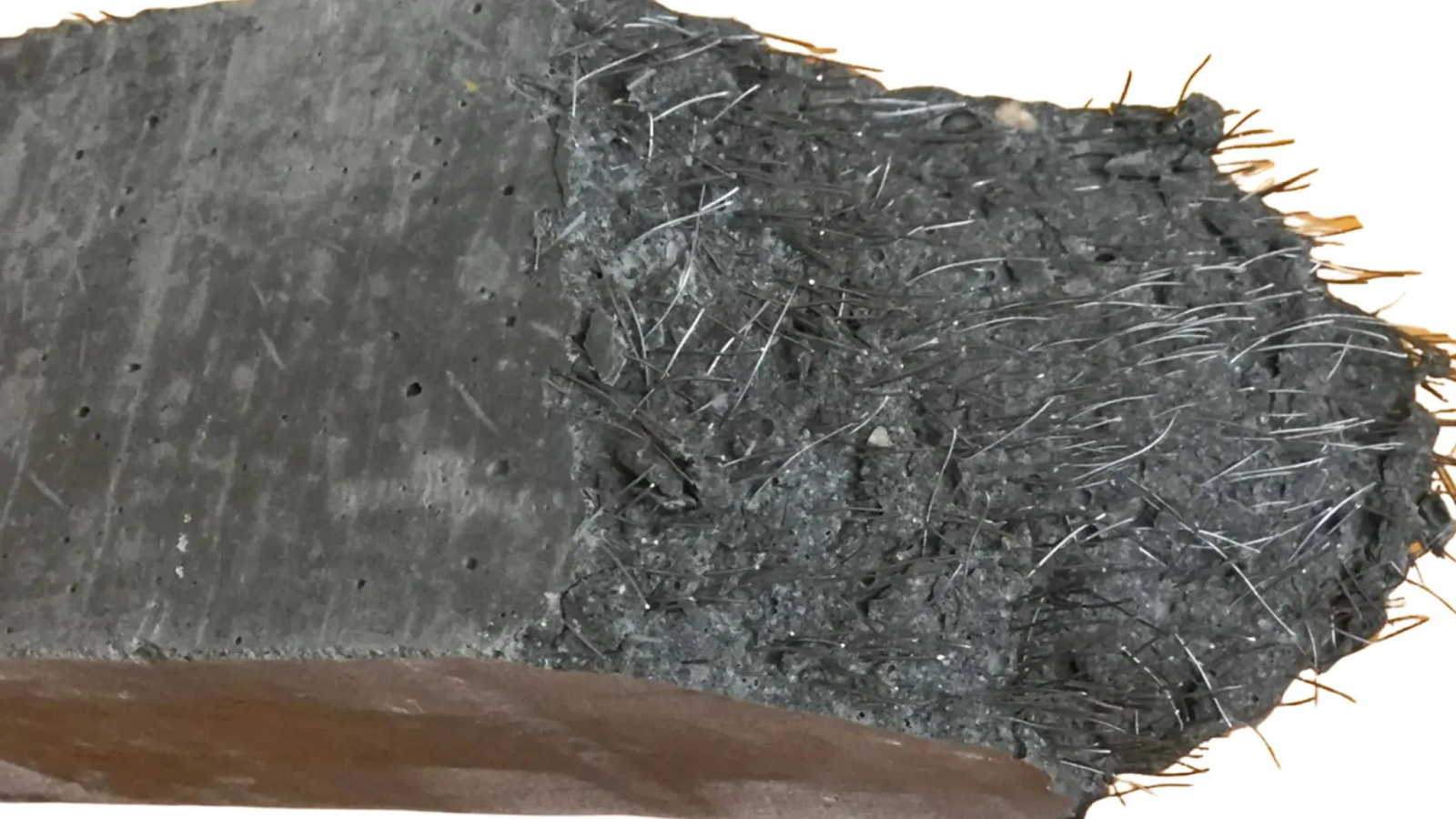
Process steps:
· Surface preparation: The mold surface or surface to be sprayed must be cleaned and coated with a release agent to ensure good adhesion.
· Glass fiber preparation: Glass fibers are prepared in advance, usually as long fibers with high tensile strength. The glass fibers can be cut to the desired length before use.
· Concrete preparation: The concrete is thoroughly mixed with components such as cement, sand, water, and necessary additives to improve bonding and load-bearing capacity.
· Glass fiber spraying: Glass fibers are sprayed onto the concrete surface using a specialized spraying machine. The fibers are typically sprayed together with a polymer binder to enhance adhesion and load-bearing capacity.
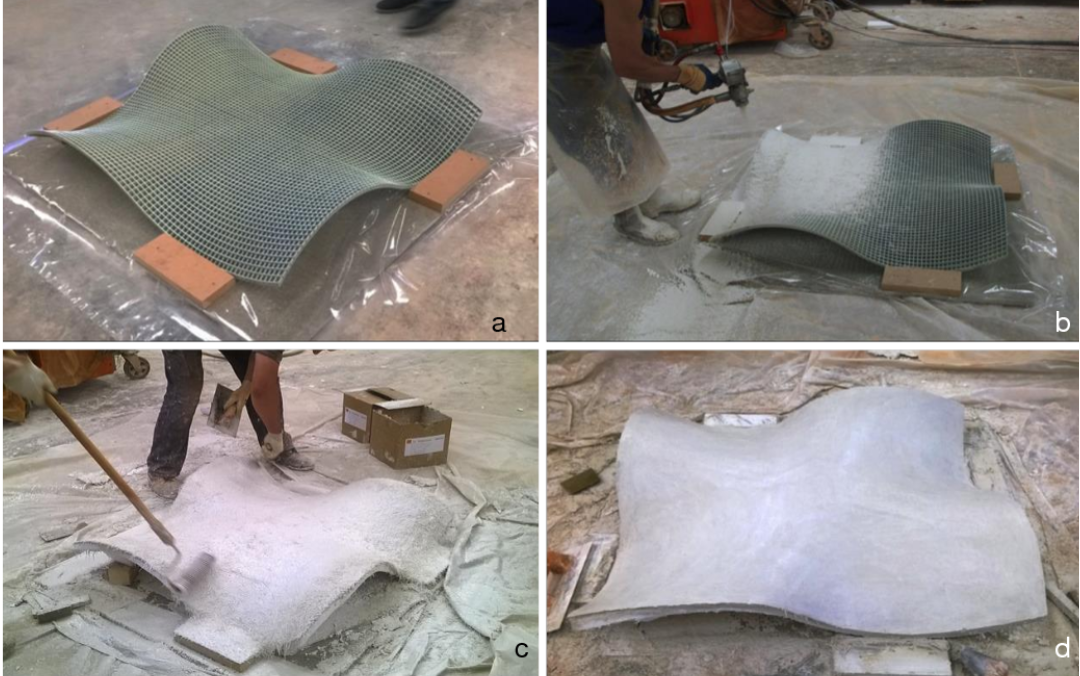
· Concrete spraying: Concrete is sprayed onto the glass fibers using specialized spraying equipment, creating a composite layer of concrete and glass fibers. This process produces a product with good water resistance and load-bearing capacity.
· The product is left in the mold and covered with polythene to prevent moisture loss until the following day. The product is then demolded.
· After demolding, the products are covered with polythene and left to cure for approximately 7 days. Alternatively, if a polymer curing compound is used in the mix, the units can be exposed to air immediately, although they should be protected from direct sunlight or harsh outdoor conditions for a day or two. Refer to the Polymer Supplier’s instructions.
2. Premixed:
Shorter fibers are premixed into the liquid concrete mixture, which is then poured into a mold or sprayed. Premix spray guns do not require a fiber-cutting machine, but they can still be expensive. Premixed GRC also tends to have lower strength than spray-applied GRC because the fibers are shorter and more randomly distributed throughout the mix.
Process steps:
· Sand and cement are dry-mixed, after which water/additives and polymer (if used) are added. A high-speed mixer is used to mix the materials into a smooth mixture. This takes approximately 1–2 minutes. The mixer is then switched to a low speed, and chopped fibers (approximately 13 mm long) are gradually added. The fibers are mixed into the material for approximately 1 minute.
· Once the mixture has been prepared, it is poured into a mold and compacted using a vibrating table.
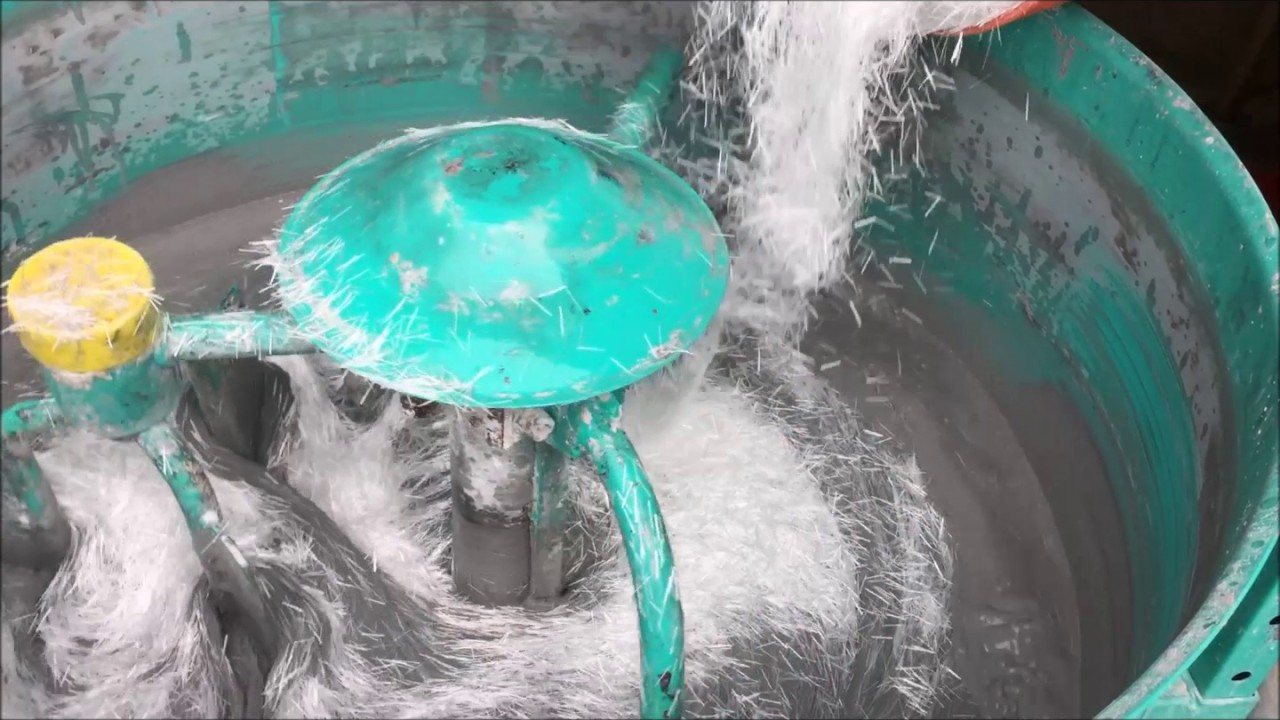
· The product is left in the mold and covered with polythene to prevent moisture loss until the following day. The product is then demolded.
· After demolding, the product is cured under polythene to maintain moist conditions for approximately 7 days. Alternatively, a polymer curing compound may be used as described for the spray process.
See also: How Is GRC Glass Fiber Reinforced Concrete Made?
The above provides information about GLC that LPC would like to share with readers. GRC glass fiber reinforced concrete is not only a relatively new construction material but is also becoming an important trend in the construction industry. With its unique properties and flexibility in application, GRC not only meets technical requirements but also offers benefits that every investor and architect should know about.
See also: Economic and Technical Efficiency of Flat Slabs Compared with Traditional Slabs
See also: The Construction Materials Market Is Evolving in Response to Investors’ Needs
— Lam Pham Construction Co., Ltd. – LPC
Hotline: 0911.29.9696
Website: https://lpc.vn
Facebook: Lam Pham Construction
YouTube: Lam Pham Construction
TikTok: Lam Pham Construction
More articles
All news

Have a project in mind?
LPC engineers are ready to share their experience and propose the right solution for your project.