Series on Foundations (Part 1)
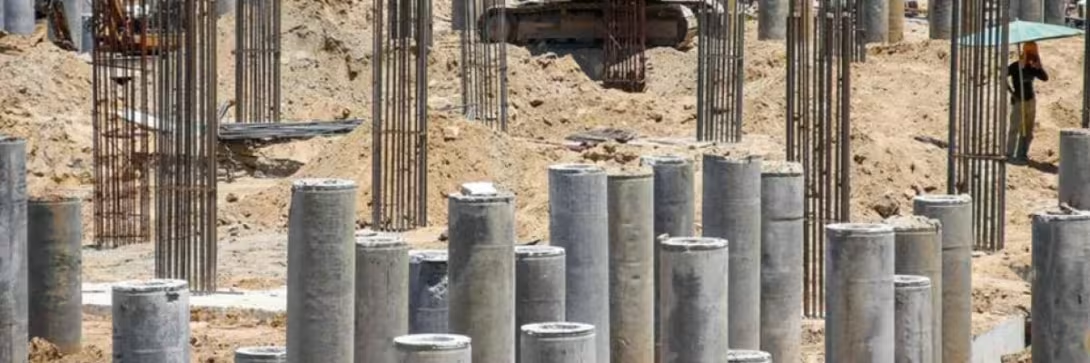
Foundations play an important role in every construction project. To have a beautiful and sturdy building, the foundation must be constructed firmly and safely. To better understand foundations, let’s discuss the “series on foundations” with LPC in the article below.
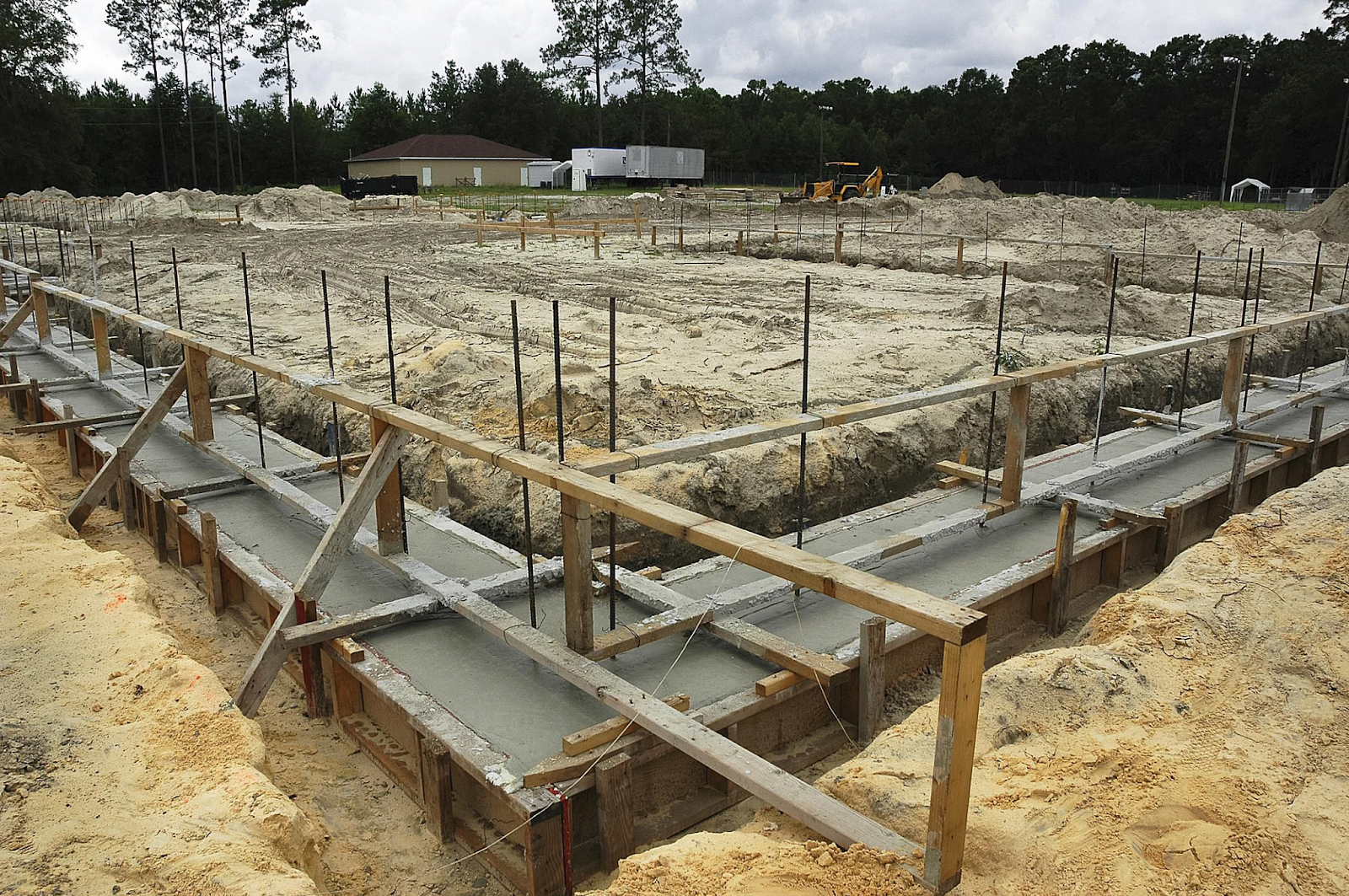
1. Classification of foundations
Classification of soil:
The foundation soil is the layer of soil or rock beneath the bottom of the foundation, playing an important role in bearing the load of the entire structure. The design of the foundation soil is carried out to ensure that it can withstand the loads transmitted by the foundation. The design method generally follows the principle of optimizing load distribution to ensure the stability and safety of the structure.
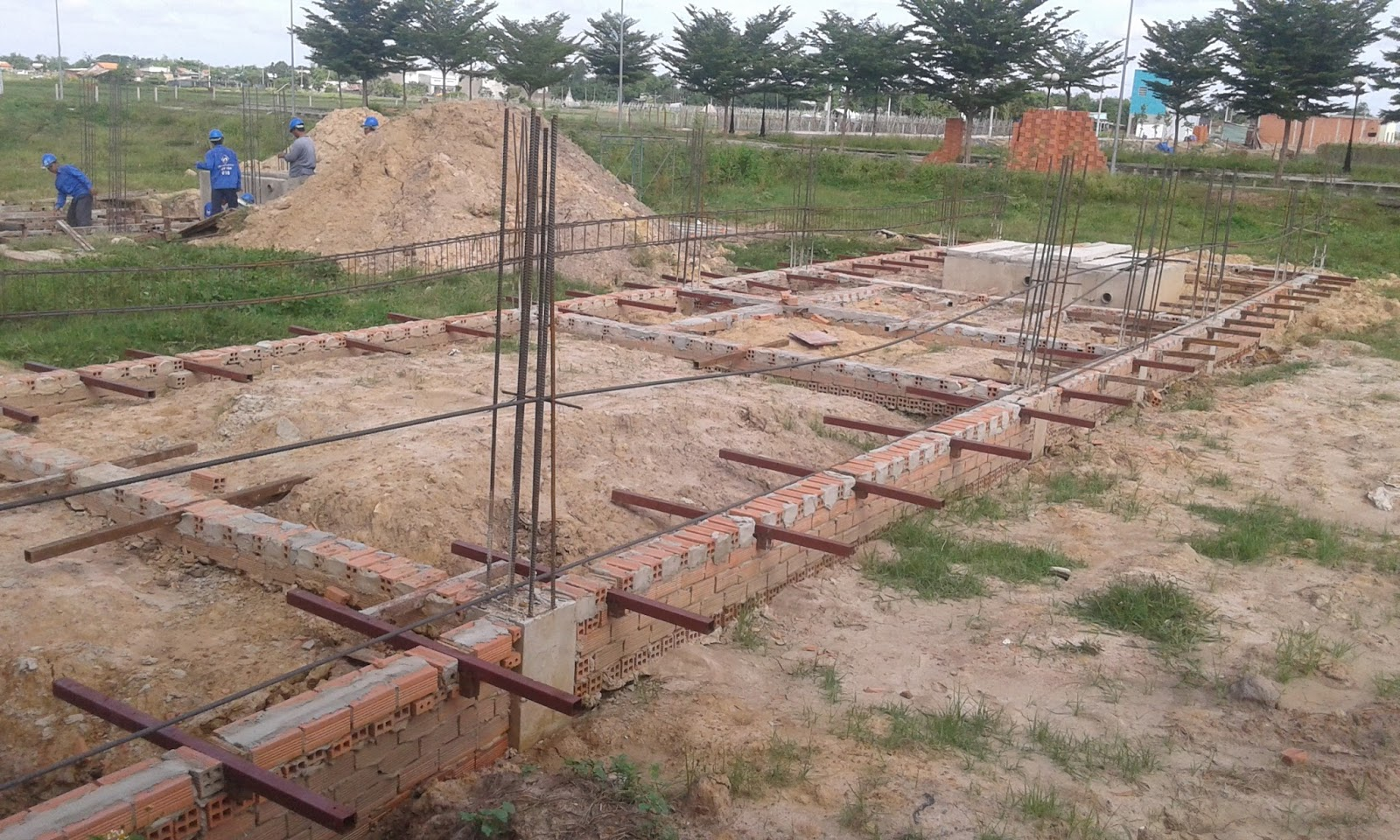
Foundations are divided into two types:
- Natural foundation: the soil at the bottom of the foundation has sufficient bearing capacity to support the load of the structure. Natural foundations include soil and rock foundations.
- Artificial foundation: when the soil does not have sufficient capacity to support the load of the structure, reinforcement measures must be applied to increase the bearing capacity and reduce settlement of the structure.
Classification of foundations:
Building foundations are structural components located at the bottom of a building, connected to the load-bearing elements above, such as columns, walls, and other components. The main function of a foundation is to bear the weight of the building and distribute it into the soil.
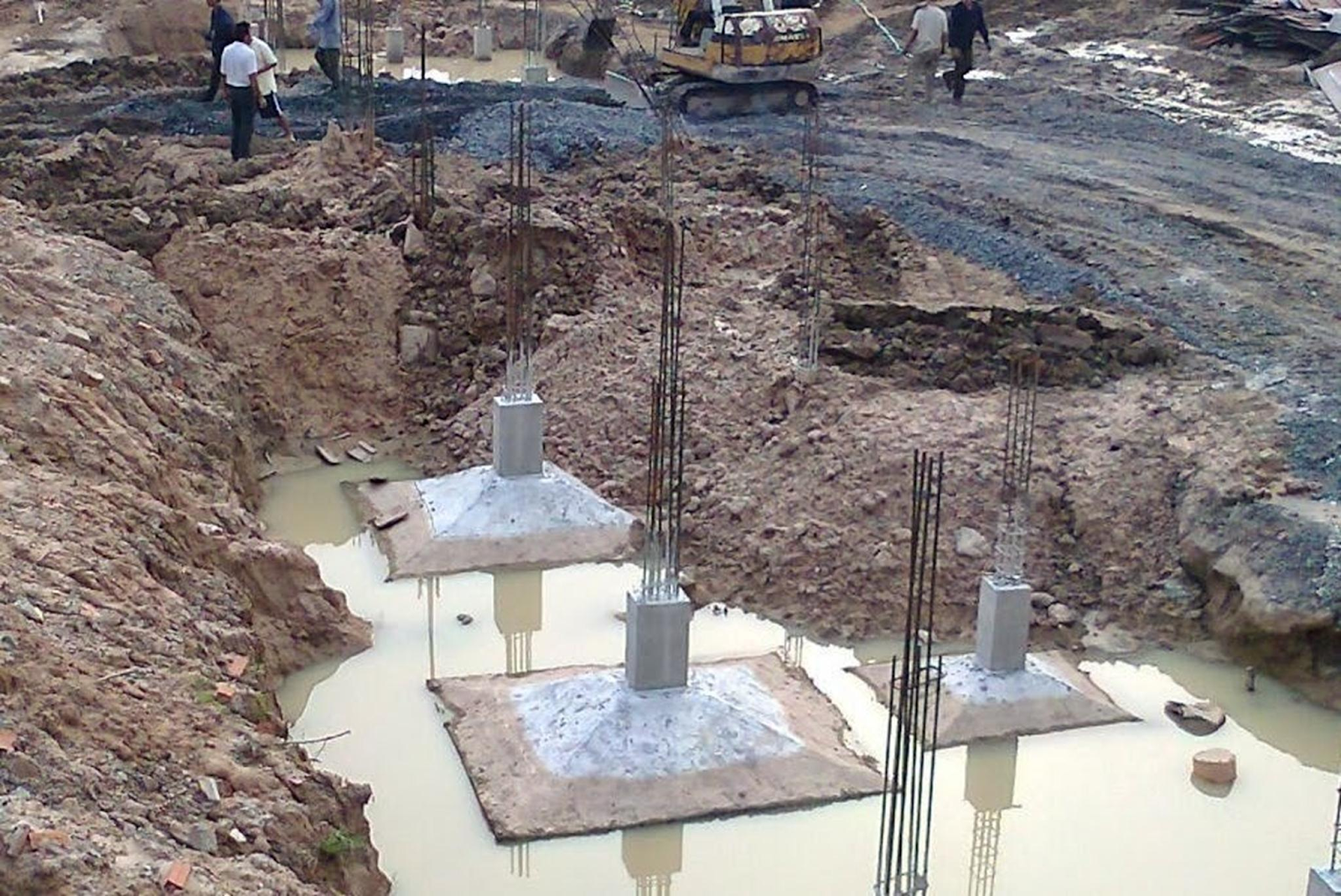
To ensure stability, the contact surface between the bottom of the foundation and the soil must be completely horizontal, without any slope, however slight. This surface is called the foundation bottom. The depth from the foundation bottom to the natural ground is called the foundation embedment depth.
Foundations can be classified in many different ways:
- By foundation material: brick and stone foundations, concrete foundations, reinforced concrete foundations.
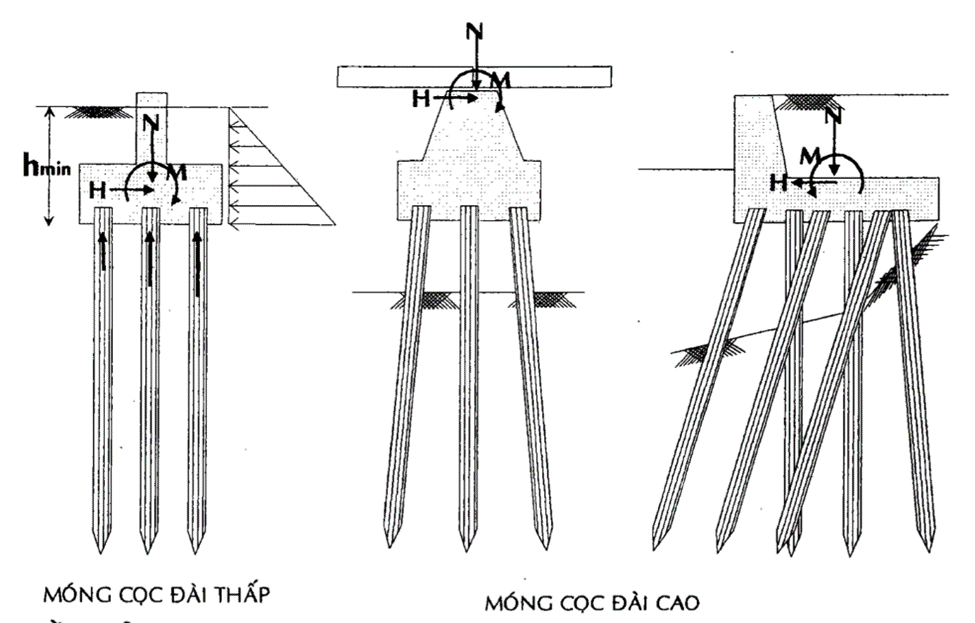
- By working characteristics of the foundation: for shallow foundations (rigid foundations, flexible foundations); for pile foundations (high pile caps, low pile caps).
- By foundation construction technology: prefabricated foundations, cast-in-place foundations, semi-prefabricated foundations.
- By foundation depth: shallow foundations, deep foundations.
2. Classification of shallow foundations
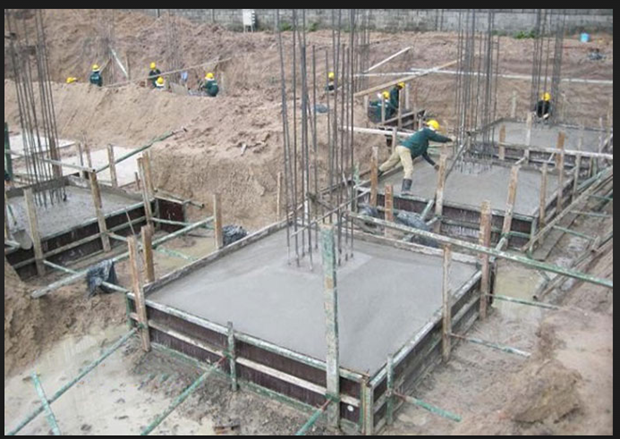
Isolated foundation (also known as pad foundation)
Isolated foundations are used when the soil has good bearing capacity and the column loads are not too large, typically for low-rise buildings (1–2 stories). Isolated foundations should not be used on poor, muddy, or unstable soil. The greatest advantage of isolated foundations is that they help save foundation construction costs.
Raft foundation
A raft foundation is a flexible foundation that covers the entire building footprint. Raft foundations are suitable for projects with good geological conditions and thick, stable soil layers. When widening the footing of a strip foundation is ineffective, a raft foundation may be considered.
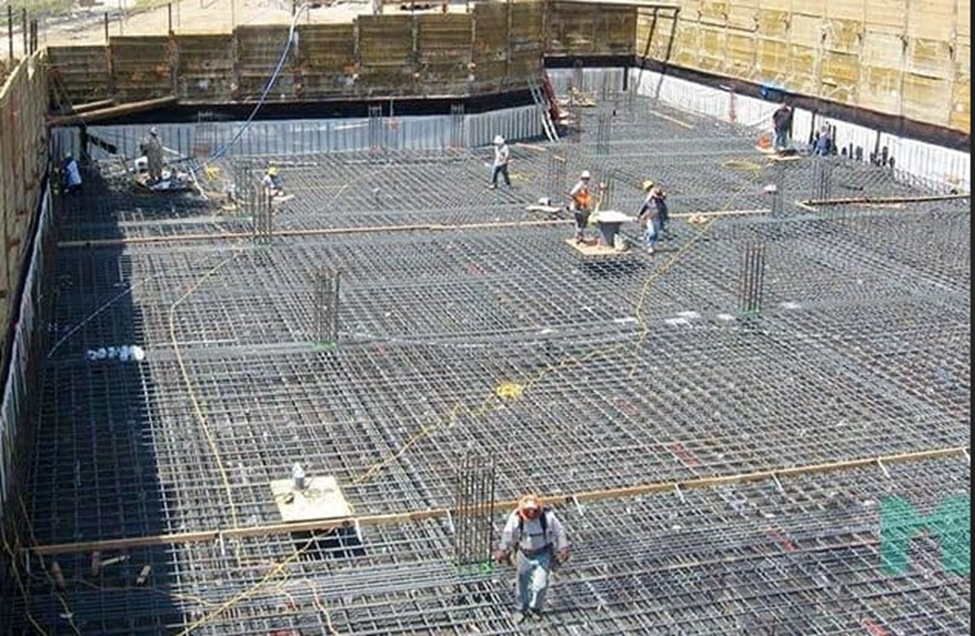
Raft foundations are a type of shallow foundation, making them suitable for structures with relatively small loads and low heights. They are best used in areas with low building density and limited impact from neighboring structures.
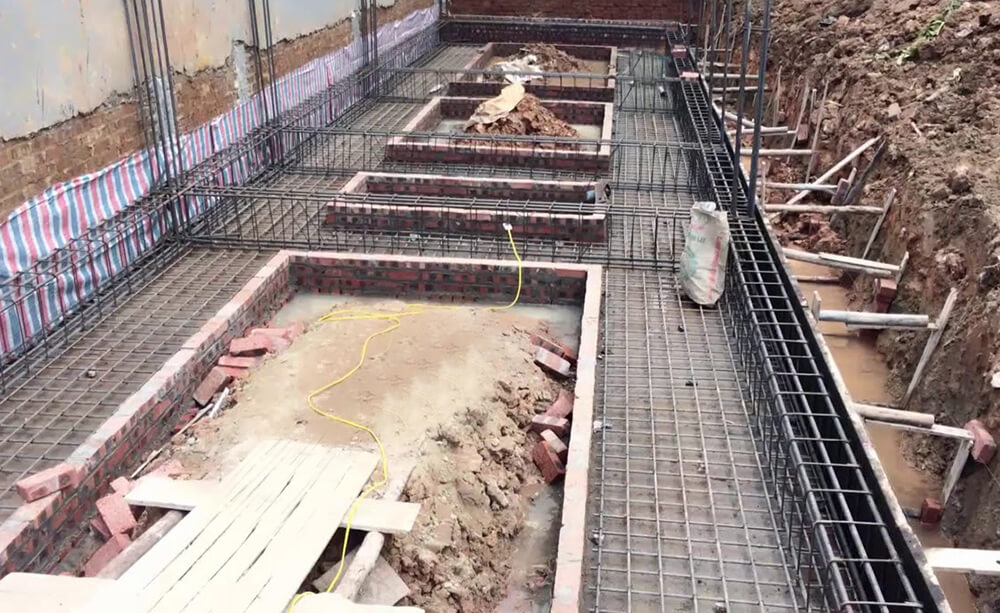
Strip foundation
Strip foundations are mainly used for medium-scale, low-rise buildings (3–5 stories) with good soil conditions. The advantage of strip foundations is that they reduce the pressure at the foundation base and help distribute the building load more evenly into the ground.
See also: Crack calculation and checking according to TCVN 5574:2018
3. Understanding pile foundations
Pile foundations are cylindrical foundations that use materials such as concrete and Melaleuca piles driven into the ground to transfer the structural load to stronger soil layers below. Pile foundations are used when the soil beneath the foundation is too weak to adequately support the structural load.
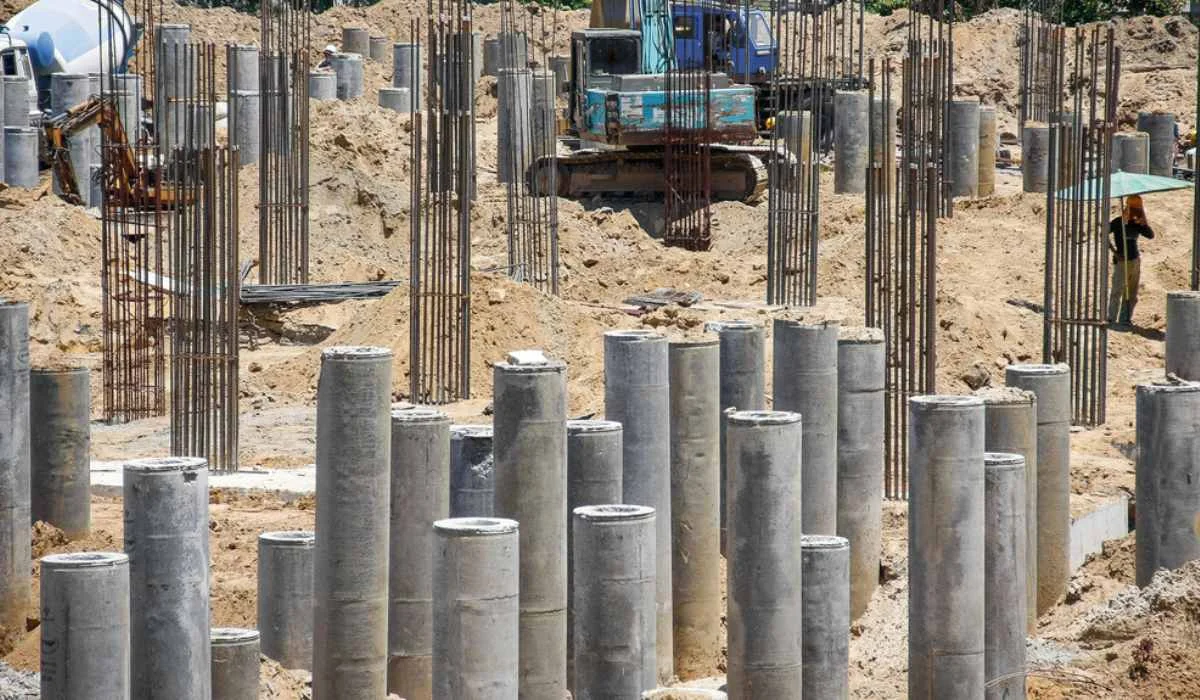
Currently, pile foundations are divided into two main types:
- Low pile cap foundation: the pile cap is located below ground level and is subjected entirely to compressive forces.
- High pile cap foundation: the pile cap is located above ground level and can withstand bending and compressive loads.
4. Understanding driven piles
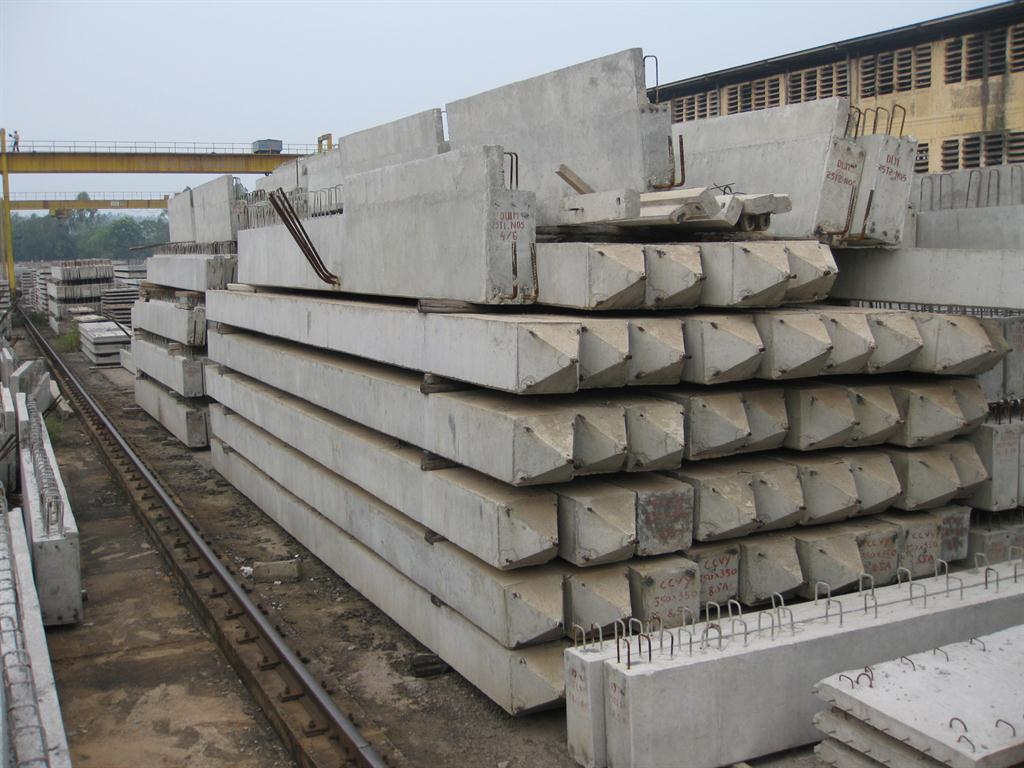
Concrete pile driving is the process of using compressive force to drive precast concrete piles deep into the ground at specific locations according to the design. This increases the load-bearing capacity of the foundation, helps prevent settlement, and ensures the structural stability of the building.
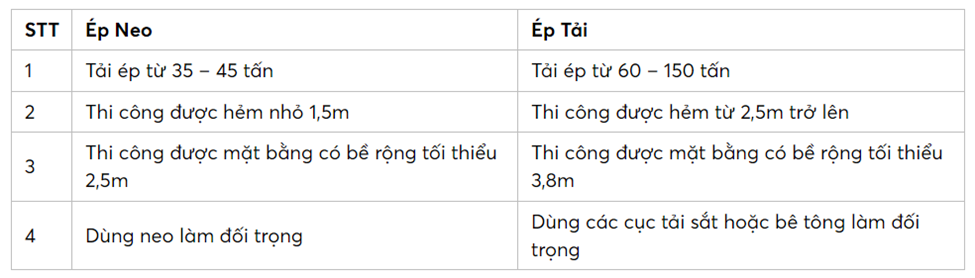
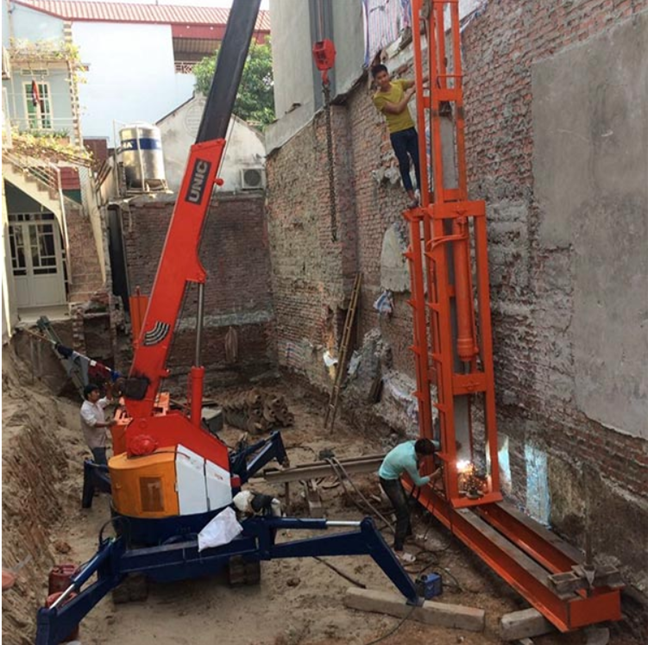
Methods of concrete pile driving:
Part 1 of the “Series on Foundations” will end here for now. Stay tuned for Part 2 of this series, which LPC will reveal in the next article!
Lam Pham Construction Co., Ltd. – LPC
- Hotline: 0911.29.9696
- Website: https://lpc.vn
- Facebook: Lam Pham Construction
- Youtube: Lam Pham Construction
- Tiktok: Lam Pham Construction
Related articles
View all
LONGITUDINAL BENDING COEFFICIENT η OF REINFORCED CONCRETE COLUMNS SUBJECTED TO ECCENTRIC COMPRESSION ACCORDING TO TCVN 5574-2018
According to TCVN 5574-2018, the longitudinal bending coefficient η is a parameter used in the structural calculation of reinforced concrete columns subjected to eccentric…

Directions for improving the quality of social housing today and in the future
On December 1, 2023, the Hanoi Association of Architects organized a discussion session entitled “Planning and Architecture of Social Housing – Present and Future”. At the…
Large-span slabs and experience in constructing beamless flat slabs in 2024
Large-span slabs or beamless flat slabs are no longer a new construction material solution and are currently attracting the attention of many investors. With their ability to…
Building sustainable projects together
Follow expert knowledge from LPC engineers or contact us when you need advice.