

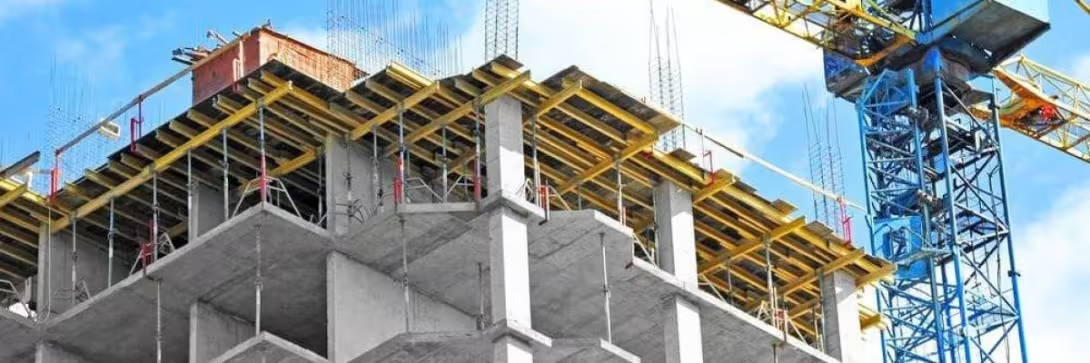
Prestressed concrete slabs are one of the most advanced and modern slab construction technologies available today, offering the advantage of optimizing structural loads and achieving long spans. This solution is also attracting the attention of many developers and contractors, who are increasingly choosing and trusting it. Join LPC to learn more about prestressed concrete slabs and their potential combination with Ubot flat slabs in this article!
What Are Prestressed Concrete Slabs?
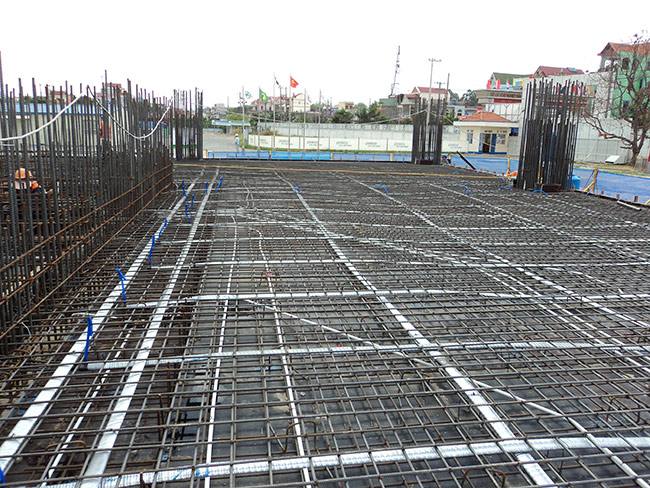
Prestressed concrete slab technology is a reinforced concrete structural technology that combines conventional reinforced concrete with prestressing and uses higher-strength reinforcement than conventional concrete slabs. In addition to the basic reinforced concrete system, prestressed slabs use high-strength steel. When the steel tendons are tensioned, they create a force that can reduce the effects of the slab's self-weight by up to 80%, significantly reducing the amount of reinforcement required.
Prestressed concrete slab technology was invented by a French engineer, Eugene Freyssinet. In 1928, he used high-strength steel tendons to compress concrete.
Classification of Prestressed Concrete Slabs
Based on their structural components, prestressed concrete slabs are divided into two main types: bonded tendon prestressed slabs and unbonded tendon prestressed slabs.
Bonded Tendon Prestressed Slabs (bonded tendon)
This type is mainly made of bonded tendons. Thanks to the high elasticity of the tendons and the bond between the concrete and the tendons, the system creates an upward reverse curvature in the concrete structure, generating an upward balancing force when the slab is subjected to loads. As a result, these slabs can withstand loads approximately twice as high as conventional concrete slabs.
Unbonded Tendon Prestressed Slabs (unbonded)
The structure of this type of slab develops an upward reverse curvature during operation. The tendons are enclosed in polyethylene and coated with a lubricant. For unbonded tendon prestressed slabs, the design stress requirements must be met for the slab to carry loads properly.
Advantages and Disadvantages of Prestressed Concrete Slabs
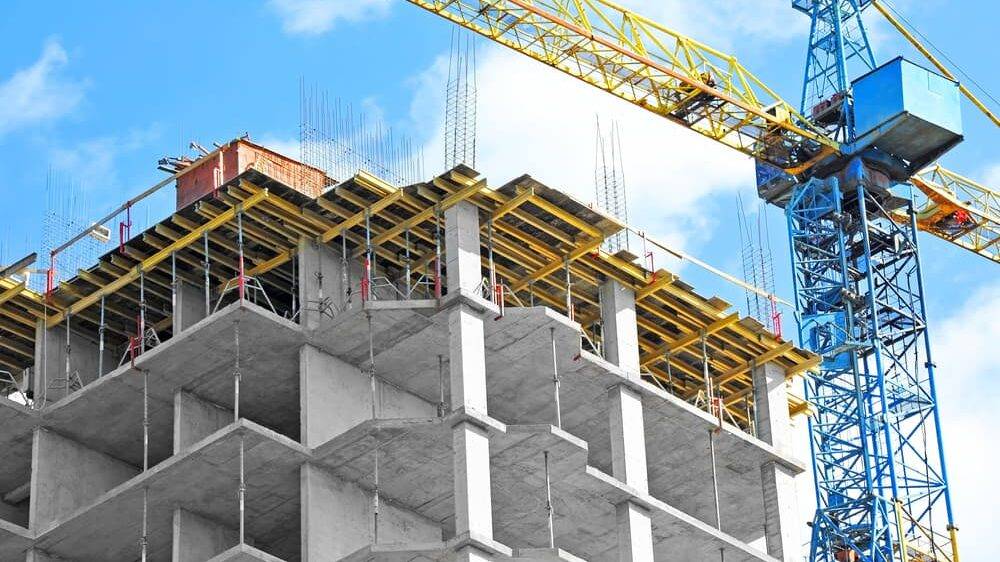
Advantages of Prestressed Concrete Slabs
Widely Applicable to Various Types of Projects
Prestressed concrete slab technology has been applied to many different types of projects, from residential construction to industrial facilities. It is mainly used for large-scale projects, high-rise buildings, factories, and industrial plants.
Fast Construction
Prestressed concrete slab construction requires less concrete while still ensuring the slab's elasticity and load-bearing capacity compared with conventional concrete. As a result, formwork can also be dismantled more quickly, accelerating project schedules while still ensuring the technical performance, aesthetics, and quality of the entire project.
Optimized Economic Efficiency
Using prestressed concrete slabs can reduce construction costs compared with conventional concrete. Because the main concrete slab structure and precast panels are produced in advance, both foundation and slab costs can be reduced. In many projects, costs can be reduced by up to 40% compared with conventional construction methods.
Long-Span Capability
When the Ubot flat slab solution is combined with prestressing, it can achieve spans of up to 22 m while maintaining a relatively moderate slab thickness.
Increased Slab Stiffness
Prestressed concrete slabs save reinforcement material while providing significantly better performance than conventional solutions. This is because, for large structures, the stiffness of a prestressed concrete slab system can be lower than that of beams. However, when compared with conventional concrete solutions, the overall structural performance can be significantly improved.
Disadvantages of Prestressed Concrete Slabs
In addition to the notable advantages that have made prestressed concrete slabs a choice for many developers, their construction also has several disadvantages that should be considered:
- Prestressed concrete slabs are a technically complex technology, so ordinary residential projects generally have limited access to this construction technology.
- A professional and highly specialized construction team is required.
- Difficulties may arise during future renovation or modification.
- Vibration and limited sound insulation during use.
Applications of Prestressed Concrete Slabs
With advantages such as saving time and costs while providing high aesthetic quality, prestressed concrete slabs have been applied to many different types of projects. In major Vietnamese cities such as Hanoi and Ho Chi Minh City, prestressed slab design has been widely used in high-rise residential buildings, companies, and office buildings in recent years. Major groups such as Vincom, Sungroup, and Sunshine Group have widely adopted this technology.
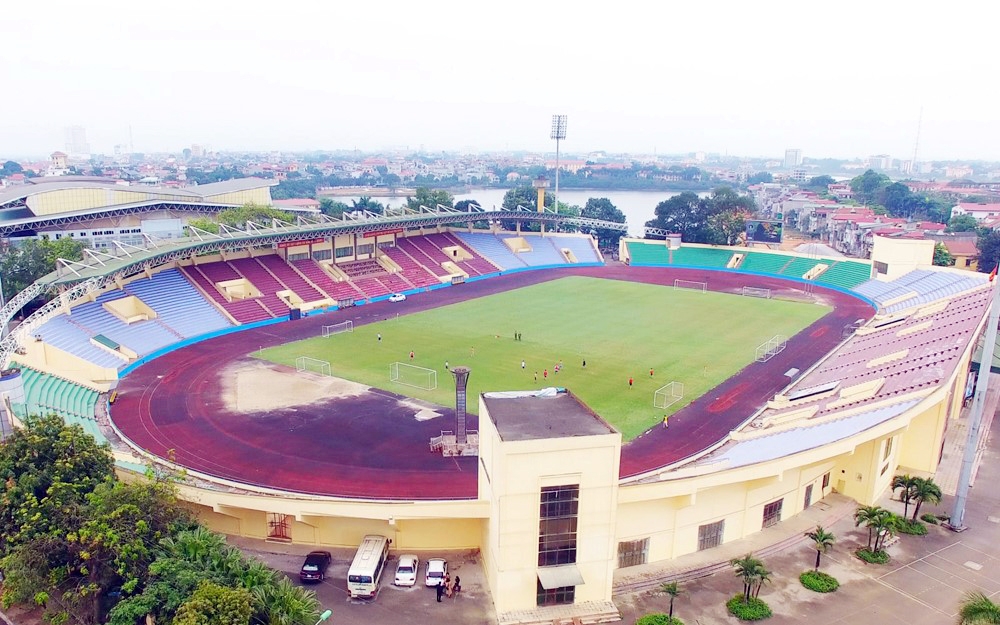
In addition to high-rise buildings, this type of slab has also been successfully applied to industrial and civil projects such as:
Industrial projects: an industrial garment factory in Thai Binh, the VINASTONE tile manufacturing plant in Phu Cat – Ha Tay, and others.
Civil projects: Thai Nguyen University of Medicine, Viet Tri Stadium in Phu Tho, and others.
Guidelines for Prestressed Concrete Slab Design
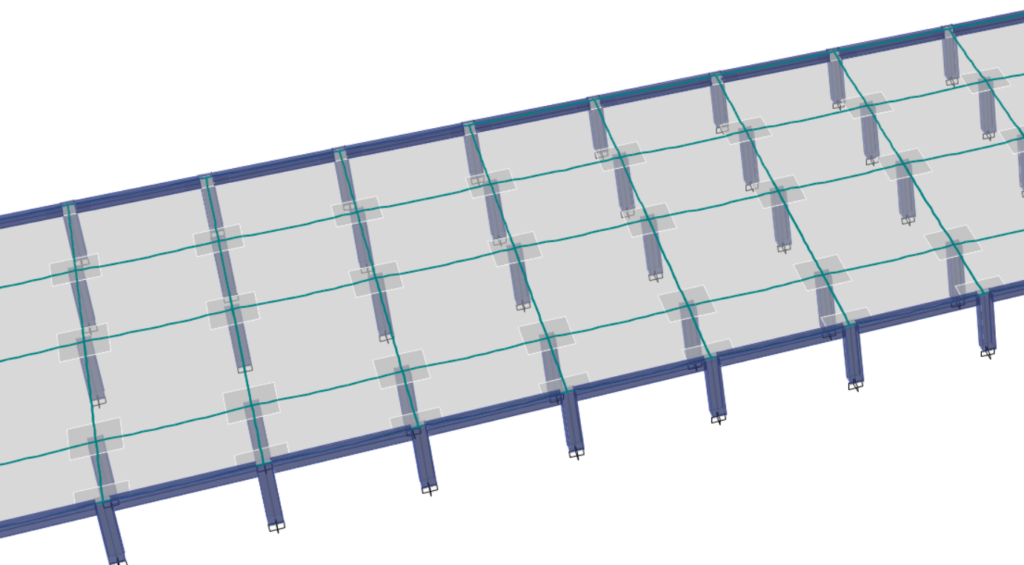
During the design of prestressed concrete slabs, the following factors must be ensured:
- Prestressed concrete slab design for the project
Prestressed concrete slabs are considered economically effective for spans ranging from 6 m to 20 m; however, this also depends on the structural system, design approach, and applied loads.
- Structural design calculations
Selection of the Floor Plan Layout: Because prestress losses along the tendon length vary, the prestress gradually decreases from the stressing end toward the anchorage end. Where permitted, the final span length can be reduced to achieve the desired moment balance according to the design intent. After determining the positions of the columns and walls, the slab type should be selected based on the span length, architectural form, functional requirements, and available material costs. However, the slab must satisfy strength and deflection requirements.
Prestressing Force: this is defined as the force used to tension the tendons. For slabs, the design prestressing force is generally taken as <= 80% fpu.
Prestressing Tendons: depending on the slab type, geometry, and dimensions, different tendon layouts will be selected. For example, in special cases where tendons pass through openings smaller than 300 mm, they can be placed almost anywhere in the slab without significantly affecting tendon performance. However, larger openings require careful consideration.
- Determine the slab thickness, column heads, and beams
These parameters are designed in accordance with the applicable construction requirements and standards.
—- Lam Pham Construction Co., Ltd. – LPC
Hotline: 0911.29.9696
Website: https://lpc.vn
Facebook: Lam Pham Construction
Youtube: Lam Pham Construction
Tiktok: Lam Pham Construction
More articles
All news

Have a project in mind?
LPC engineers are ready to share their experience and propose the right solution for your project.