IS GEOTECHNICAL INVESTIGATION DRILLING REALLY NECESSARY?

Geotechnical investigation is the first and extremely important step in the construction process, especially for residential buildings such as houses. Studying and evaluating the soil conditions helps determine factors affecting the quality of the building, from selecting a suitable foundation to assessing the building's load-bearing capacity, as well as directly affecting its long-term durability and service life. Join LPC to learn more in the article below.
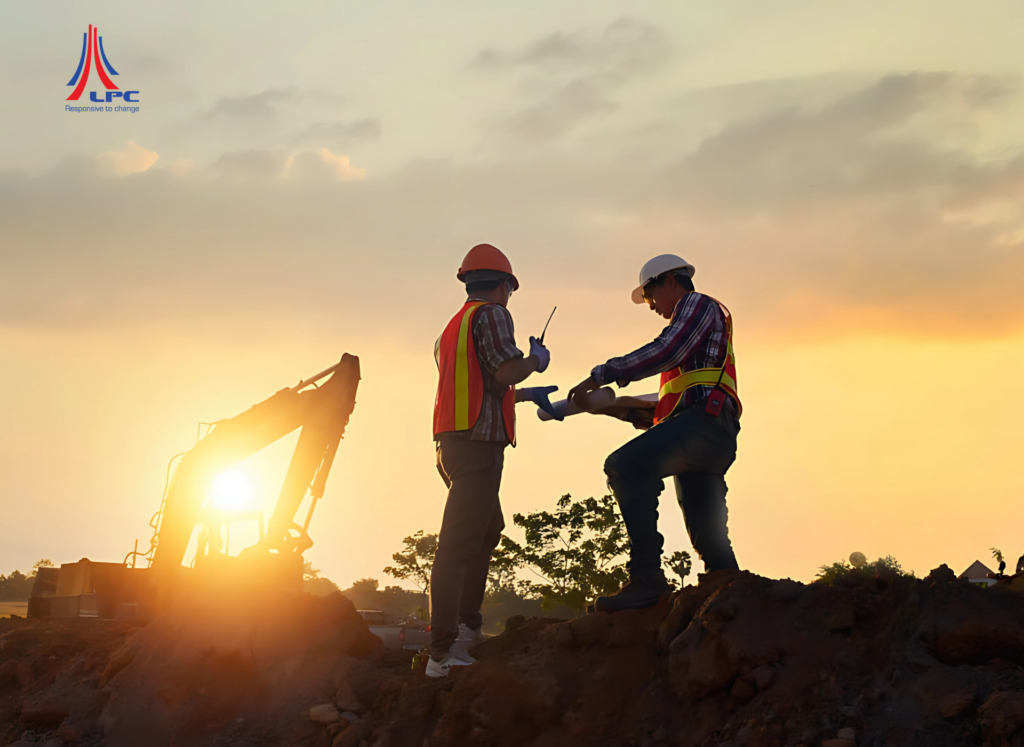
Therefore, geotechnical investigation drilling is an essential step in the construction process, helping engineers determine important soil characteristics, such as stability, settlement, and load-bearing capacity.
However, not everyone fully understands its importance, and many homeowners are still concerned about the cost and time required. Geotechnical investigation not only helps protect the safety of the building but also saves costs in the long term and avoids unnecessary risks.
Therefore, this article will clarify why geotechnical investigation drilling is necessary, the implementation process, costs, and the benefits that geotechnical investigation brings to residential construction.
1. Is geotechnical investigation drilling important?
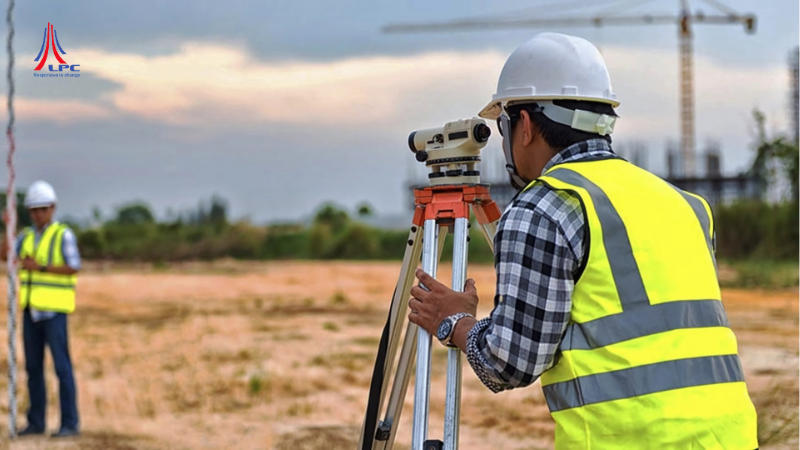
Geotechnical investigation drilling is not only an important initial step but also a factor that determines the quality of a building's foundation, especially for residential buildings such as houses. Here are the reasons why homeowners should consider conducting a geotechnical investigation:
- First: Investigation drilling helps accurately assess the characteristics of the soil at the construction site. In nature, soil is not uniform and may contain weak soil layers, sandy mud, or layers prone to settlement. Without a clear understanding of the local soil structure, the risk of building on weak foundations may lead to problems such as differential settlement, cracked walls, or a tilted house.
- Second: The geotechnical report from the drilling process provides a scientific basis for engineers to design an appropriate foundation solution. For example, on firm soil, shallow foundations may be used to save costs. Conversely, if the soil is weak, reinforcement measures such as driven piles, pressed piles, or raft foundations may be required to ensure safety.
- In addition: In many localities, providing a geotechnical investigation report is a mandatory requirement for obtaining a construction permit. The absence of this report may result in violations of legal regulations, causing additional time and costs for remediation.
2. Geotechnical investigation drilling: How it is carried out
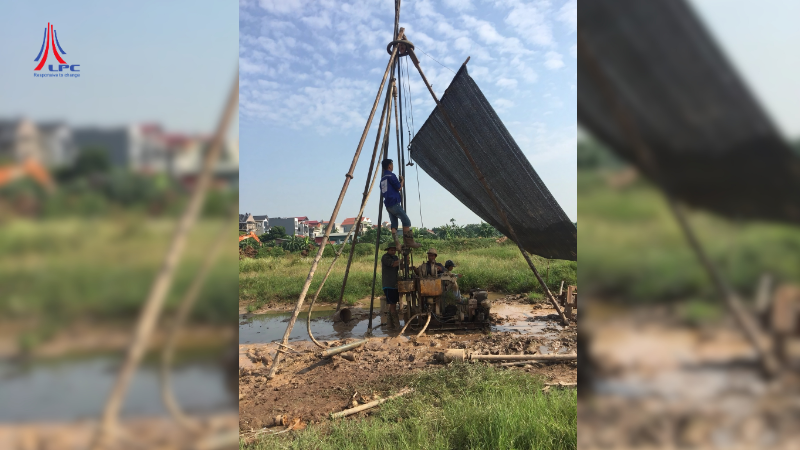
The geotechnical investigation drilling process is carried out systematically and scientifically to ensure that sufficient data is collected for foundation design and building construction. First, the drilling locations must be carefully selected to represent the entire construction area.
Typically, engineers arrange boreholes at the corners and center of the site to ensure that the data accurately reflects the geological conditions. For small sites ranging from 50–100 m², only 1–2 boreholes are required; for larger areas, the number of boreholes may increase to 3–4 or more depending on the terrain.
The drilling depth depends on the scale of the building. For residential buildings of 1–3 floors, the drilling depth typically ranges from 10–20 m. If the soil has complex characteristics such as weak soil, loose sand, or the site is near a riverbank, the drilling depth may increase to 30 m or more to ensure a comprehensive assessment of the geological layers.
During drilling, specialized drilling equipment collects soil samples at different depths. These soil samples are carefully packaged and transferred to a laboratory for analysis. Important indicators such as density, compressibility and settlement, water permeability, and load-bearing capacity are measured.
3. Time and cost of geotechnical investigation drilling
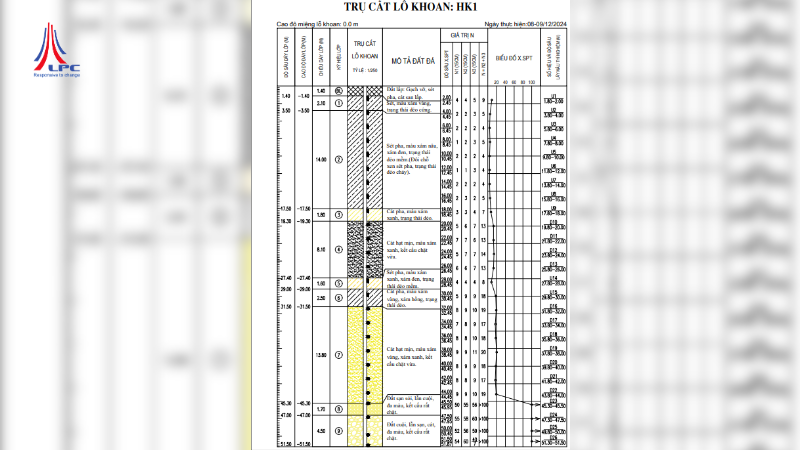
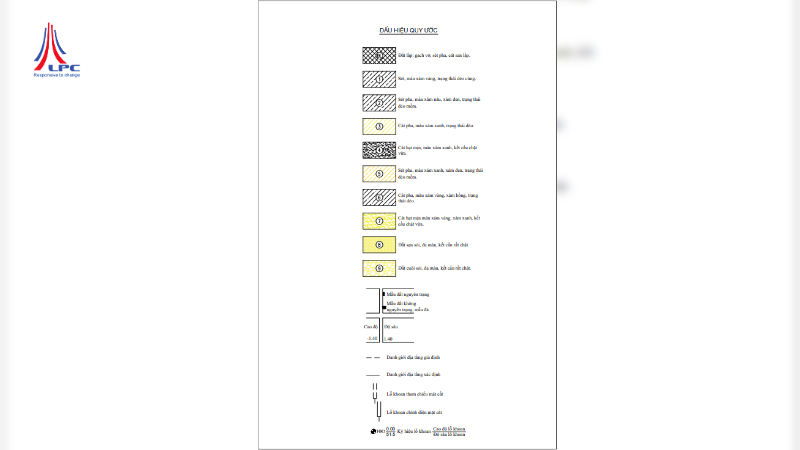
The geotechnical investigation drilling process is usually relatively quick and suitable for the schedule of residential construction projects. For a small house of 1 to 3 floors, the drilling and report preparation are usually completed within 3–7 days.
In terms of cost, geotechnical investigation is priced based on the number of boreholes and the depth of each borehole. For a small residential building, only 1–2 boreholes with depths of 10–20 m are required, with the cost typically ranging from 7–10 million VND per borehole.
4. Geotechnical investigation drilling for residential buildings
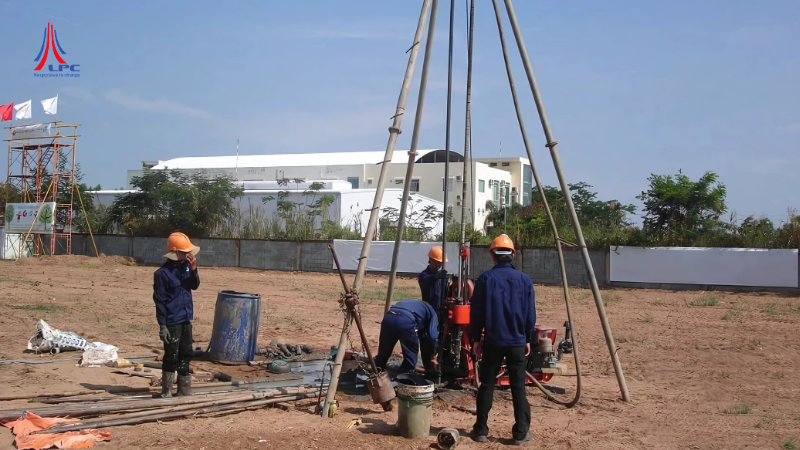
For households, the decision to conduct a geotechnical investigation should be based on actual conditions and the scale of the building. Here is specific advice for each case:
- If you are building a house on weak soil, such as near a river, lake, or an area with a history of settlement, geotechnical investigation drilling is mandatory.
- Conversely, if your building is small (1–2 floors) and located on stable soil that has been verified by nearby buildings, geotechnical investigation drilling may not be mandatory. However, homeowners should consult engineers or specialized professional units.
In conclusion, although the cost of geotechnical investigation is not too high compared with the total construction cost, the benefits it provides are significant. Investing in geotechnical investigation not only ensures the sustainability of the building but also helps you avoid risks and additional costs in the future.
Lam Pham Construction Co., Ltd. – LPC
- Hotline: 0911.29.9696
- Website: https://lpc.vn
- Facebook: Lam Pham Construction
Related articles
View all
LONGITUDINAL BENDING COEFFICIENT η OF REINFORCED CONCRETE COLUMNS SUBJECTED TO ECCENTRIC COMPRESSION ACCORDING TO TCVN 5574-2018
According to TCVN 5574-2018, the longitudinal bending coefficient η is a parameter used in the structural calculation of reinforced concrete columns subjected to eccentric…

Directions for improving the quality of social housing today and in the future
On December 1, 2023, the Hanoi Association of Architects organized a discussion session entitled “Planning and Architecture of Social Housing – Present and Future”. At the…
Series on Foundations (Part 1)
Foundations play an important role in every construction project. To have a beautiful and sturdy home, the foundation must be built firmly and safely.
Building sustainable projects together
Follow expert knowledge from LPC engineers or contact us when you need advice.