8 ADVANTAGES OF THE UBOT BOX THAT HAVE TAKEN UBOT FLAT SLABS TO A NEW LEVEL
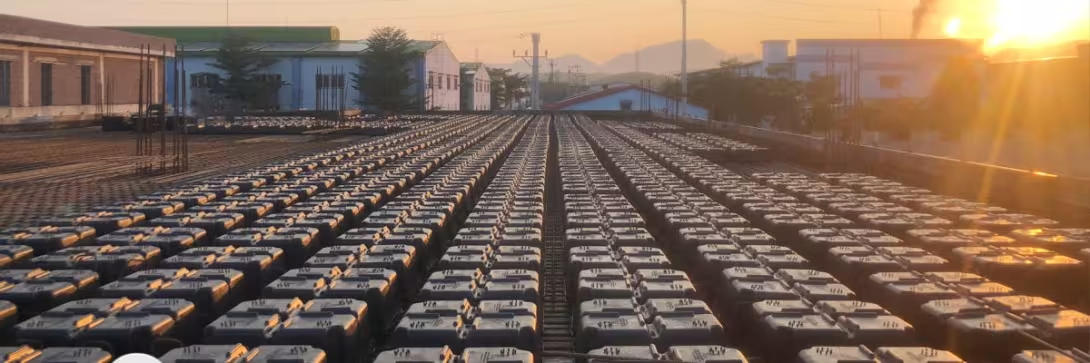
Ubot box or Uboot Beton (or void-forming box for concrete slabs – Ubot) is one of the new technology construction materials widely used as a replacement for traditional concrete slab structures, creating beamless flat slab systems applicable to various types of projects of different scales.

From the first version, the 4-legged Uboot box, to the advanced improvements made to date, the Ubot box has taken Ubot flat slabs to a new level. Let's take a look with LPC at the 8 improved advantages of the Ubot box over the past 12 years.
1. THE UBOT BOX REDEFINED THE PRINCIPLE FROM “ARCHIMEDES' BUOYANT FORCE” TO “COMMUNICATING VESSELS”
LPC (Lam Pham Construction) was the first company to introduce the Ubot flat slab – Uboot Beton solution to Vietnam in 2012. The first version of the Technology/Solution transferred and trained by Daliform Group – Italy was the 4-legged Uboot Beton flat slab without a lid; without auxiliary legs; the supports on the box were 8 mm high, and the principle was “Archimedes' buoyant force” to create voids inside the box.
In Vietnam, pouring concrete with two mix designs and two different slump levels in the same slab creates difficulties during construction. In addition, many projects use stationary concrete pumps, and the concrete compaction process with this method can easily cause the boxes to float upward, resulting in the burning of the top reinforcement. Floating can also occur in projects using boom pumps if the concrete is not poured and compacted properly.
Based on these practical conditions, LPC engineers determined that: To prevent buoyancy, air must be allowed to escape, meaning the Archimedes' buoyant force principle must be abandoned so that air can freely enter and exit, thereby completely limiting the buoyancy of the box and reinforcement. A new principle for Ubot flat slabs, “COMMUNICATING VESSELS”, was established and widely adopted.
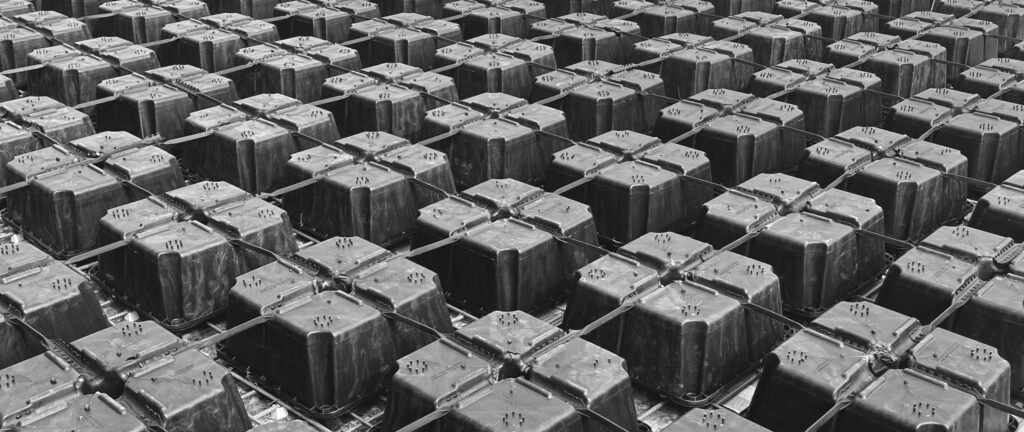
See also: Ubot flat slab construction material solution
2. THE UBOT BOX WAS ADDED WITH AN ELEPHANT FOOT – THE FIFTH LEG
In practice, during the construction of the Ubot flat slab solution in Vietnam, workers are not comfortable moving across the slab if working boards have to be placed. However, if the placement is not properly secured or the technical instructions provided by the transferring engineers are not followed, moving across the surface of the Ubot boxes can easily cause the boxes to crack or break. This can cause the boxes to lose their airtightness and allow concrete to flow into the inside of the boxes.
With the communicating vessels principle redefined to suit projects in Vietnam, an air outlet is required during concrete pouring to prevent trapped air while also reducing the buoyancy of the boxes.
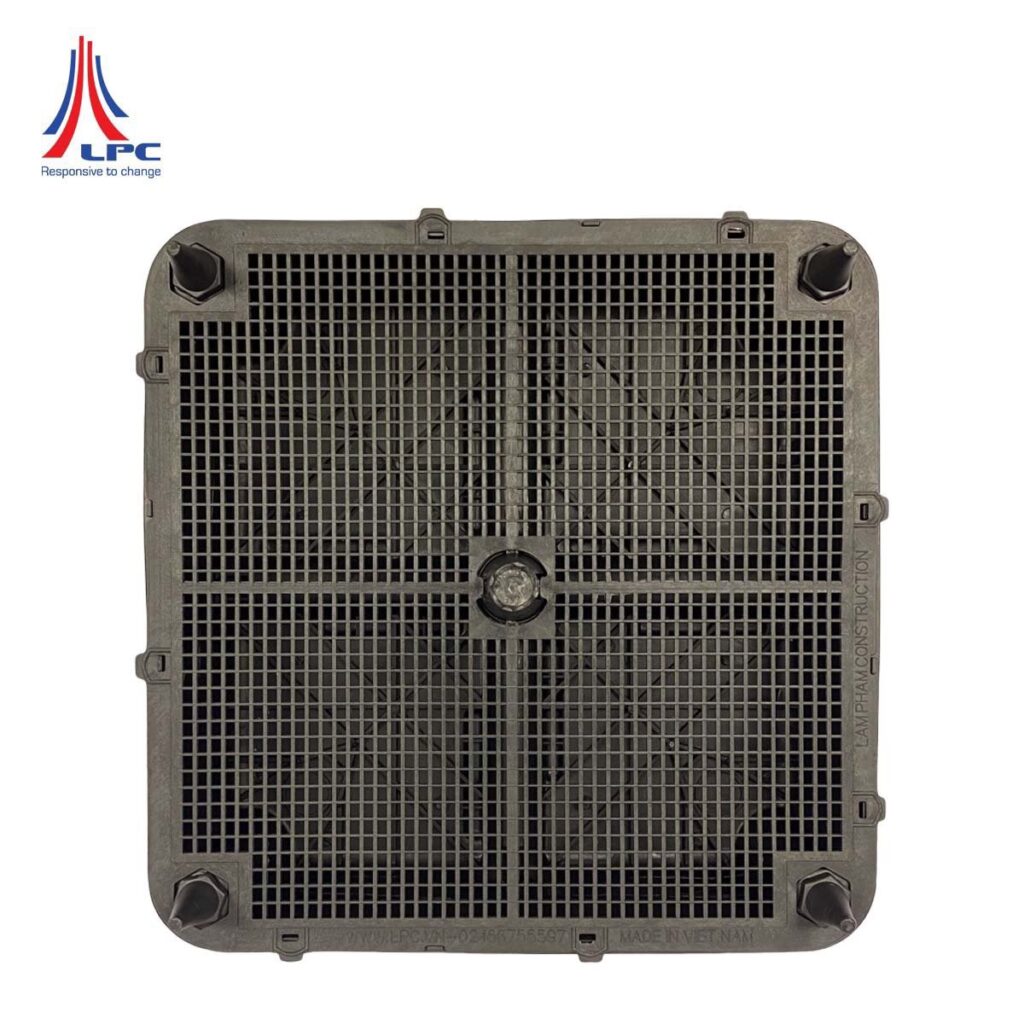
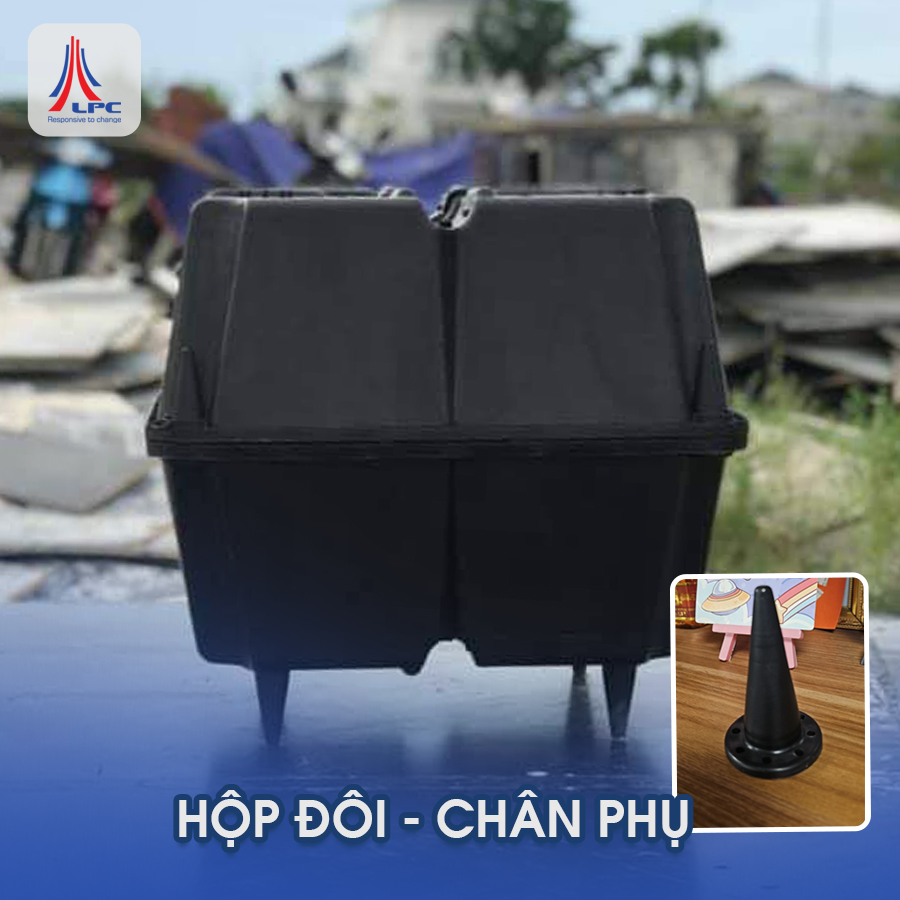
Therefore, the second advantage of the Ubot box was the addition of a fifth leg, also known as the “Elephant Foot”, at the weakest position of the Ubot box, which is the center of the box. The fifth leg is the largest leg, located directly in the center of the Ubot box, with a structure consisting of a cone-shaped opening in the middle and openings on both sides where the first concrete layer is placed.
- The conical leg helps when stacking the boxes on top of one another, making transportation and loading/unloading easier and saving storage and yard costs.
- The central opening allows the amount of concrete in the lower layer to be observed and inspected, ensuring that there is no shortage of concrete and minimizing the occurrence of honeycombing on the concrete surface after formwork removal.
- The two openings on both sides of the box leg allow air to escape when the concrete reaches the thickness of the lower layer and also allow the box lid (cap) to be attached securely so that it does not fall out.
See also: Ubot box load-bearing capacity test
3. ADDING A LID/CAP TO THE UBOT BOX TO PREVENT CONCRETE FROM FLOWING INTO THE BOX
With the principles used in previous Ubot versions, a problem arose for LPC and contractors implementing the beamless flat slab solution: “CONCRETE LOSS”. Concrete could be lost by 10–12% and flow into the boxes to a depth of up to 4 cm.
When cooperating with major contractors to apply and implement the Ubot flat slab solution, such as: Hoa Binh; UDIC; Thang Do Construction; Vinaconex Group; Corporation 36, Ministry of National Defence;… LPC also researched solutions such as sequential concrete pouring and pouring concrete in two stages. However, these methods were still difficult to handle because most projects at that time used stationary concrete pumps.
From the principle of the Ubot flat slab solution, “Communicating Vessels”, to the need to completely address concrete loss, LPC engineers proposed and further improved the UBOT BOX LID, also known as the CAP, with advantages that have been proven in practice.
- The Ubot box lid measures 52x52 cm. It has a 10x7 mm mesh to prevent aggregate and concrete from entering the Ubot box.
- The box lid has 4 openings at the four corners for easy attachment to the Ubot box legs.
- It is designed with 8 locking tabs that grip the edge of the box to secure the lid and Ubot box during box installation.
4. SURGICAL REDESIGN OF THE UBOT BOX RIBS/SUPPORTS
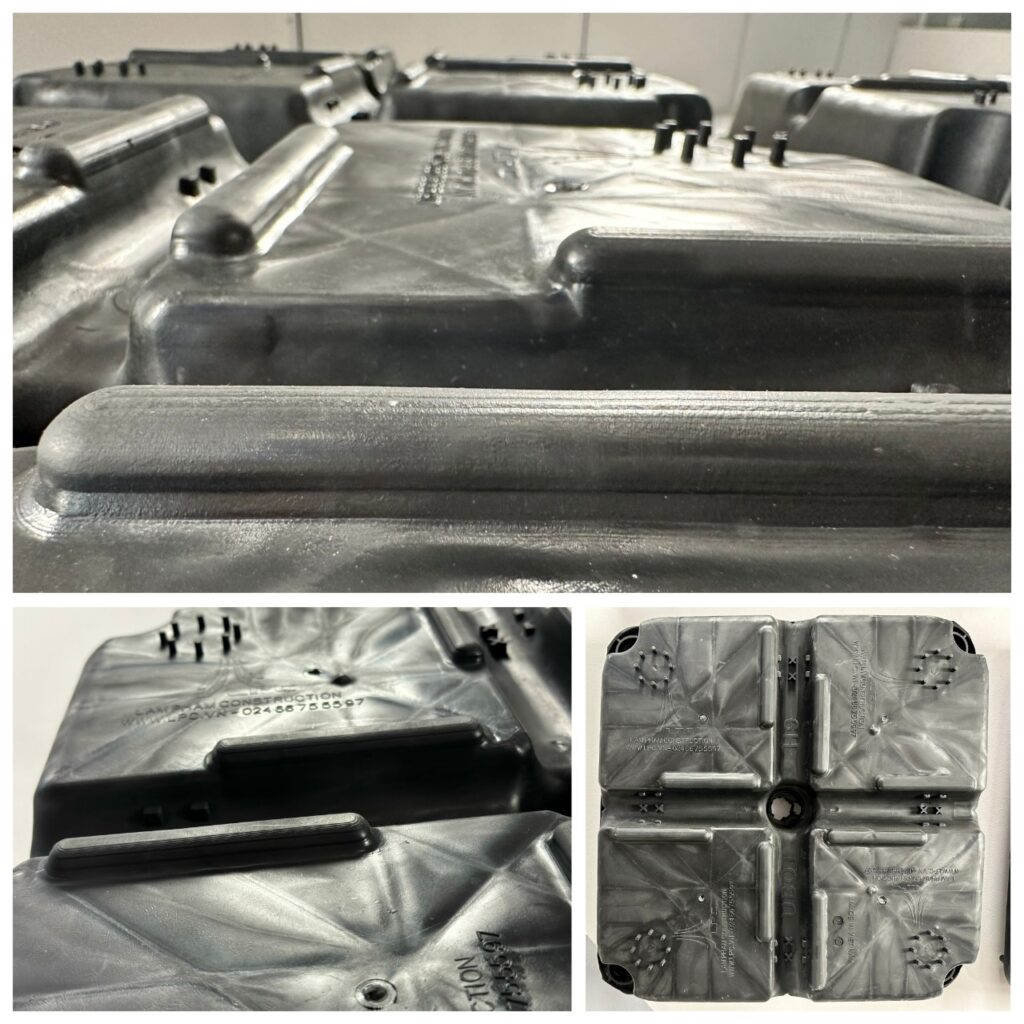
Ribs/supports are components of the Ubot box, arranged on the surface of the box. Their main function is to support the top reinforcement, preventing the reinforcement from lying directly against the box surface and ensuring that it is completely encased in concrete. They also serve to increase the stiffness of the box.
When the Ubot flat slab – Uboot Beton technology was transferred to Vietnam, the first version of the Ubot box had straight, parallel ribs/supports that were only 8 mm high. During concrete pouring, reinforcement at many locations shifted out of the ribs/supports or sagged down and came directly against the box surface.
In response to this issue, the ribs/supports of the Ubot box were “surgically redesigned” by LPC, giving them a new, more refined appearance and more complete functionality compared with the previous version:
- Increased the height of the ribs/supports from 8 mm to 12 mm so that even if the reinforcement sags, it does not come into direct contact with the box surface.
- Arranged the ribs/supports in a staggered pattern on the box surface so that the reinforcement does not move out of the supports.
5. ADDING AUXILIARY LEGS – BUT THEY BECOME THE MAIN LEGS FOR THE DOUBLE BOX
The Ubot double box is a special version of the void-forming box solution for concrete slabs, designed for projects with spans from 17 m to 20 m using the beamless flat slab solution.
With the current configurations of plastic boxes for conventional concrete slabs (heights of 9 cm – 13 cm – 16 cm – 17 cm – 20 cm – 24 cm – 28 cm), their use would not ensure the structural requirements of the project.
- Therefore, a box larger than 28 cm is required. However, making molds that are too large would create difficulties during production and transportation.
- The Ubot double box was developed by joining two single boxes into a double box with a height of 28 cm to 34 cm, suitable for projects requiring large spans. Therefore, detachable legs are required to attach to the top surface of the single box to form the main legs. The auxiliary legs are cone-shaped, 6–9 cm long, with 8 small openings for attachment to the tabs on the box surface, creating a secure connection.
6. THE 4 MAIN LEGS OF THE UBOT BOX HAVE MANY IMPORTANT FUNCTIONS
Fires are unwanted risks. However, if investors choose additional construction materials that can improve fire resistance, this will help reduce the risk of fire, slow the spread of flames, and help protect the lives and property of homeowners.
In practice, when using Ubot flat slabs, there are the following advantages related to fire prevention and firefighting:
- Ubot slabs have a greater slab thickness than traditional slabs. Therefore, in the event of a fire, they help reduce the impact of heat on surrounding slabs. This provides more favorable conditions and additional time for rescue, emergency response, or evacuation from the fire.
- The Ubot box legs not only determine the thickness of the lower concrete layer from 5 cm to 9 cm. When a fire occurs, the four tips of the Ubot box legs will liquefy first (because the thickness at these locations is only about 5 mm), forming four pressure-relief valves to release air. Hot air will escape through these four valve-like legs, thereby preventing localized explosions and damage to the slab structure.
- Because the slab is flat and does not have deep beams, hot air can escape to the outside more quickly and easily in the event of a fire compared with a traditional beam-and-slab design.
7. THE UBOT CONNECTOR BAR HAS A SPECIAL STRUCTURE
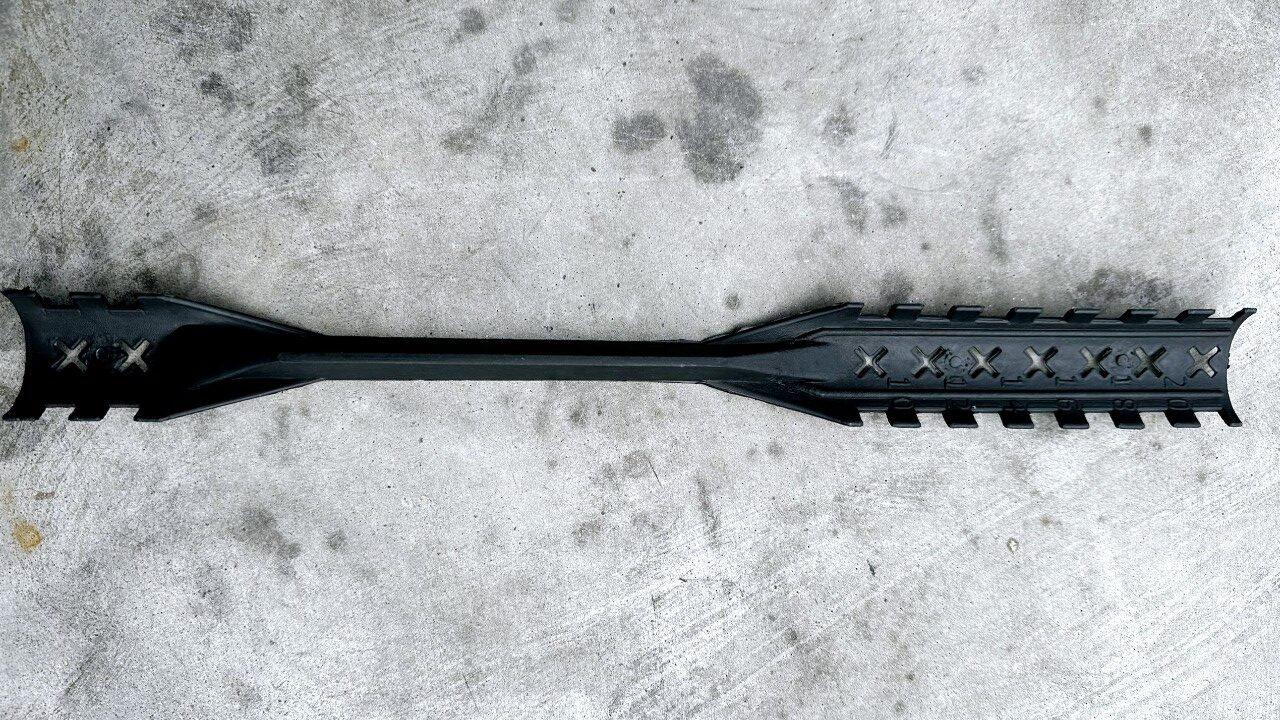
To prevent displacement, unevenness, misalignment, box buoyancy, and connection failure, the Ubot box CONNECTOR BAR has a special structure designed to fulfill its function of CONNECTION (connecting the Ubot boxes to one another).
- The short end of the connector bar has 2 cross-shaped openings for positioning it on the first box.
- The long end has 7 openings and is marked with the numbers 10, 12, 14, 16, 18, and 20 to create the spacing between box gaps according to structural engineers' calculations.
- The recessed box surface has 4 retaining ribs to prevent separation and sliding, along with 2 cross-shaped tabs. The 2 openings on the connector bar fit onto the 2 cross-shaped tabs on the box surface, preventing rotation and separation when concrete is pumped into the connector bar or when one of the two boxes moves.
8. THE UBOT BOX HAS A MATRIX-LIKE RIBBED STRUCTURE
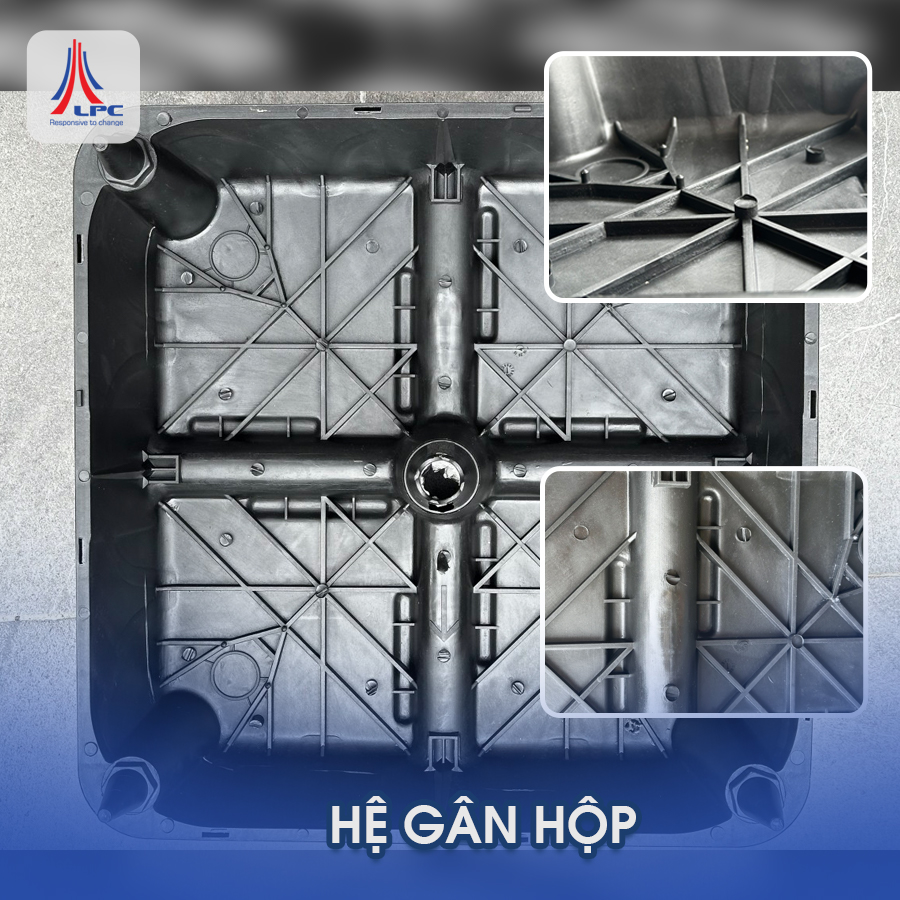
For the Ubot – Uboot Beton plastic box, both raised and recessed ribs are designed to create a load-bearing framework and distribute loads evenly to the box legs during movement and construction. The denser and stronger the rib system, the thinner the box surface can be, reducing the amount of raw material required for the plastic box.
A thinner box is lighter, but there is a risk when a batch of recycled plastic is brittle. Therefore, the selection of recycled plastic pellets during the manufacturing process also requires careful consideration. Usually, only the supplier understands this recycled plastic selection process. Therefore, investors should choose reputable and experienced solution providers to ensure optimal structural performance, efficiency, and cost for the project.
After 12 years since its transfer to Vietnam, the Ubot flat slab – Uboot Beton has been significantly improved in terms of structure and functionality, making it suitable for all types of projects in Vietnam and taking the beamless flat slab solution to a new level.
- Simplicity: Much simpler in design and construction.
- Versatility: Can be used for any project, any type of building, and in any location.
- Sustainability: A recycled material that is environmentally friendly and sustainable.
- Economy and efficiency: The solution delivers high economic efficiency and improves project schedules.
- Innovation: Better sound and thermal insulation.
Lam Pham Construction Co., Ltd. – LPC
- Hotline: 0911.29.9696
- Website: https://lpc.vn
- Facebook: Lam Pham Construction
- Youtube: Lam Pham Construction
- Tiktok: Lam Pham Construction
Related articles
View all
Standards for Concrete Work Acceptance and Proper Flat Slab Curing
Concrete work in the construction of building floors in general, and in the construction of flat slab solutions without beams in particular, is an extremely important stage.
Highlighting 2 Typical Flat Slab Spans Commonly Used for Social Housing
Flat slabs without beams are one of the construction material solutions most widely chosen by developers today. This is not only because of their outstanding advantages but also…

How Does a Flat Slab Without Beams Carry Loads?
With its excellent load-bearing capacity, flat slabs without beams are one of the trends increasingly preferred by many developers in construction projects today.
Building sustainable projects together
Follow expert knowledge from LPC engineers or contact us when you need advice.