Why does the slab crack, and what causes it?

Why Does the Slab Crack? What Causes It?
Slab cracking is one of the common problems encountered in construction. It can occur due to various causes, such as inadequate construction practices, the use of poor-quality materials, or environmental factors. To address this problem, let’s work with LPC to identify the main causes so that effective remedial measures can be applied.
What Causes Slab Cracking?
The causes of transverse cracking are related to materials and concrete mix proportions, construction practices, and other factors such as structural design. Transverse cracks often appear after the concrete has been poured, and the crack width may increase over time.
This phenomenon is common across many locations and various types of structures. It can accelerate the corrosion of reinforcement in concrete. Therefore, treating slab and concrete cracks effectively helps prevent water infiltration into the structure.
Concrete mix proportions: Using concrete with a cement content (PCB 40) >400 kg/m3 can cause brittleness and cracking.
Use of R3/R7/R14 admixtures refers to superplasticizing admixtures that accelerate early-age strength development in concrete. These admixtures accelerate the hydration process to achieve early strength, which also changes the heat generation of the concrete and reduces its water content. As a result, the concrete may dry out due to water loss, leading to cracking.
Removing formwork too early before the concrete slab reaches the required strength.
Removing the formwork from the lower floor too early while pouring concrete for the next floor can cause cracking because the construction load exceeds the design load.
Concrete-related causes:
- Improper slab curing procedures.
- Climatic conditions during concrete placement.
- The concrete grade does not meet the design requirements.
- Inadequate aggregate proportions and particle size distribution.
- Inadequate vibration during concrete placement.
- Unsuitable water used for concrete mixing. Cement paste may be lost due to water loss, such as through absorption into the ground or leakage through gaps in the slab formwork.
- Uneven concrete placement. The slab thickness may be reduced in the middle due to insufficient inspection during construction.
- Intermittent concrete delivery, resulting in concrete becoming dry and hardened or segregating.
Reinforcement-related causes:
- The crack width decreases where the crack intersects the longitudinal reinforcement in reinforced concrete members and widens toward the surface of the member. Therefore, the thickness of the concrete cover and the spacing between reinforcement bars affect crack width. Reinforcement should be distributed evenly and positioned relatively close to the two side faces and the bottom face of the beam or slab.
- Insufficient reinforcement with excessive spacing, resulting in an overly wide slab.
- Using a few large-diameter reinforcement bars (> 1/10 of the slab thickness) in an attempt to strengthen the slab, which can instead cause cracking.
- Improper reinforcement tying and connections.
- Slab deflection (transverse cracking at the center of the ceiling along the long direction), usually caused by insufficient reinforcement.
- Incorrect reinforcement fabrication and installation, resulting in inadequate concrete cover.
- Insufficient concrete cover.
- Slab reinforcement has not been fully straightened before placement.
What Should Be Considered to Prevent Slab Cracking?
Based on the causes mentioned above, to minimize and prevent slab cracking, the following points should be taken into consideration:
- Avoid using rapid-setting chemical admixtures. The use of R21 and R28 concrete is recommended.
- Concrete should preferably be poured at night, with curing started immediately after the concrete has set.
- Provide thermal expansion joints when the slab edge is too long (the long edge should not exceed 45 m).
- Reduce the cement content.
- To reduce transverse surface cracking, the cement content in the concrete mix can be reduced and, where possible, concrete with high early-age strength should be avoided.
- Use the maximum aggregate size in accordance with ACI 318, use crushed stone as coarse aggregate, and maximize the aggregate content.
- The concrete mix used for bridge slab construction should be tested for cracking using one of the standard crack testing methods.
- Begin curing immediately after completion of concrete placement. Curing should be carried out continuously for at least 7 days.
- When using R7 admixture in concrete placement, measures should be taken to control shrinkage, such as using shrinkage-compensating admixtures and implementing strict slab curing procedures to prevent shrinkage cracks.
- The slab shoring levels must comply with the applicable standards. When pouring concrete for the upper floor, at least two levels of shoring must be maintained to prevent the construction load from exceeding the design load.
With LPC, ensuring compliance with the technical requirements will help effectively address slab cracking issues.
Effective Methods for Repairing Cracked Slabs
Procedure for Repairing Slab Cracks Wider Than 0.3 mm
Step 1: Inspect and mark the crack locations.
Step 2: Clean the surface and remove contaminants using mechanical methods.
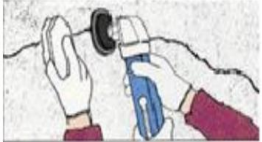
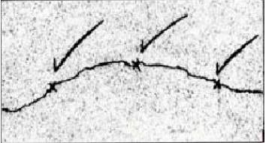
Step 3: Determine the locations for installing the cylinders.
Step 4: Drill and clean the holes before installing the plastic bases attached to the cylinders. Ensure that the plastic bases are securely fixed in the drilled holes.
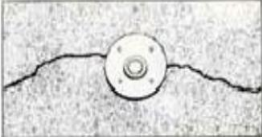
Step 5: Seal the crack surface with DY-101 adhesive.
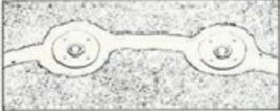
Step 6: Install Epoxy SL-1400 cylinders (with a cylinder spacing of 20–25 cm). Remove the cylinders once the DY-101 adhesive has reached the required strength. Conduct a water test within 24 hours after completing the application, after a total curing period of 48 hours.
Procedure for Repairing Slab Cracks Smaller Than 0.3 mm
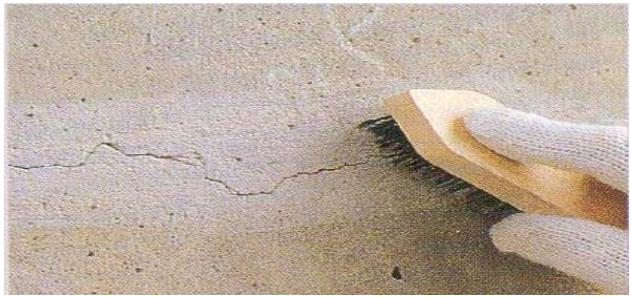
Step 1: Prepare the construction surface: The cracked surface where the penetrating waterproofing coating is to be applied must be thoroughly cleaned using a grinder or wire brush.
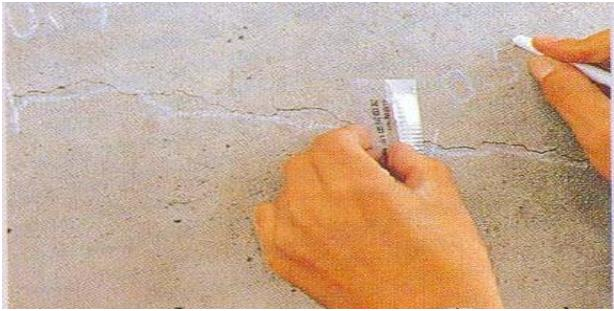
Step 2: Identify the crack locations.
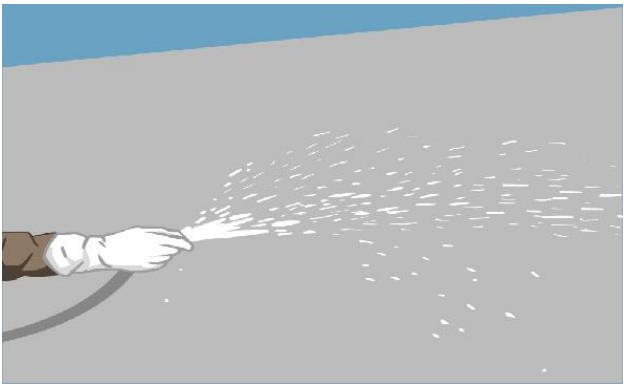
Step 3: Dampen the surface before application.
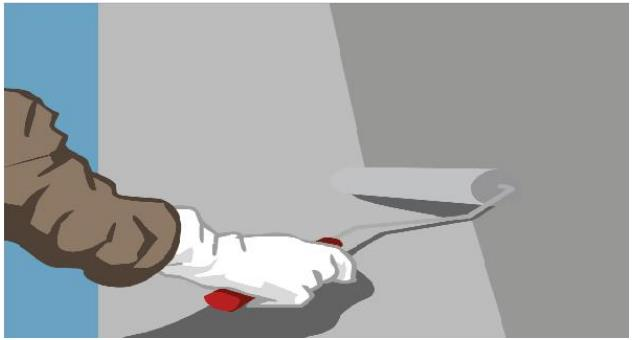
Step 4: Apply two coats of LeafSeal WP 503 penetrating waterproofing coating (0.8 kg/m² per coat).
Slab cracking is one of the common problems encountered in construction. It can occur due to various causes, such as inadequate construction practices, the use of poor-quality materials, or environmental factors. However, to address this problem, effective remedial measures must be applied. It is important to note that maintaining a strong and safe slab is essential to ensure the safety of occupants and the integrity of construction projects.
Related articles
View all
LONGITUDINAL BENDING COEFFICIENT η OF REINFORCED CONCRETE COLUMNS SUBJECTED TO ECCENTRIC COMPRESSION ACCORDING TO TCVN 5574-2018
According to TCVN 5574-2018, the longitudinal bending coefficient η is a parameter used in the structural calculation of reinforced concrete columns subjected to eccentric…

Directions for improving the quality of social housing today and in the future
On December 1, 2023, the Hanoi Association of Architects organized a discussion session entitled “Planning and Architecture of Social Housing – Present and Future”. At the…
Series on Foundations (Part 1)
Foundations play an important role in every construction project. To have a beautiful and sturdy home, the foundation must be built firmly and safely.
Building sustainable projects together
Follow expert knowledge from LPC engineers or contact us when you need advice.