Sound insulation and sound absorption – basic concepts
Sound insulation and sound absorption? Many of us confuse these two concepts because we think they are one and the same. In reality, however, sound insulation and sound absorption are two completely independent concepts. Let’s explore more information with LPC.
Concepts of sound insulation and sound absorption
What is sound insulation?
Sound insulation (sound blocking) describes the prevention of sound from traveling between two separate spaces through a dividing structure. In theory, sound insulation in a building needs to be considered from both aspects: sound transmitted from inside the building and sound transmitted from outside the building.
When sound enters a material, very little energy passes through to the other side of the material, indicating that the material has good sound insulation properties. The difference in decibels between the sound energy entering the material and the sound energy passing through to the other side represents the sound insulation level of the material.
What is sound absorption?
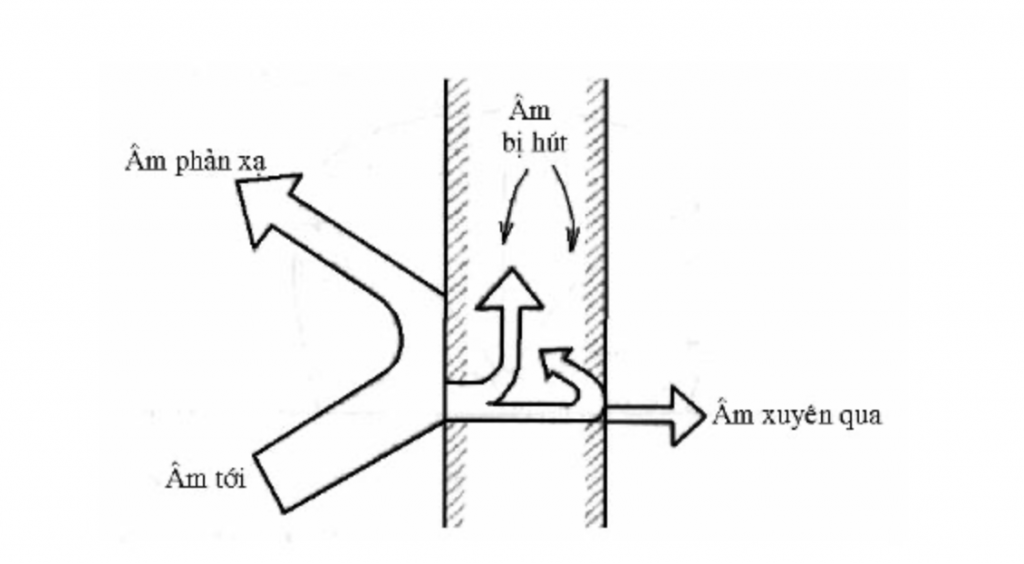
When sound waves hit a material, part of the sound energy is reflected, another part is absorbed into the material, and another part passes through to the other side of the material.
When most of the sound energy enters the material (being absorbed or passing through) while the reflected energy is very small, the material is considered to have good sound absorption properties. When the sound absorption coefficient is above 0.2, the material can be considered a sound-absorbing material.
Materials with lower sound absorption
- Brick wall 0.025
- Concrete 0.03
- Glass 0.03
- Marble 0.01
- Granite 0.015
- Metal surface 0.025
- Ceramic 0.015
Materials with higher sound absorption
- Glass wool | 0.68
- Rock wool/mineral wool | 0.72
- Acoustic foam | 0.5
- Wood wool | 0.57
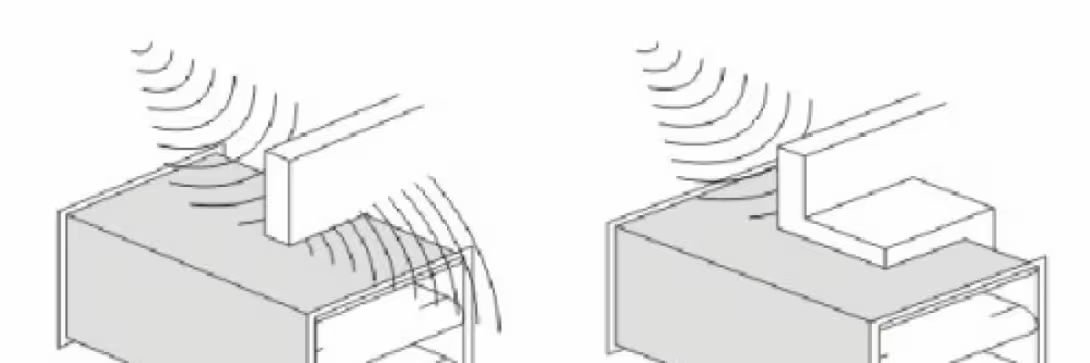
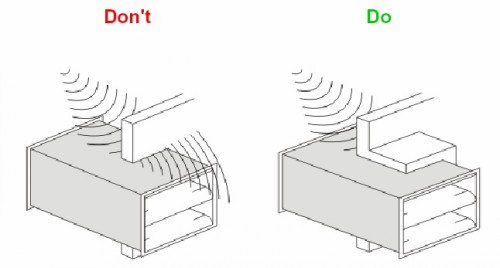
Due to sound reflection, in many rooms we feel as though the sound is echoing back. Sound reflection also creates audio interference and noise, affecting sound quality, especially in recording rooms and studios.
In places with a lot of noise, sound reflection also makes the space noisier and more uncomfortable. In particular, the sound can become very difficult to hear if you are standing or sitting directly at a sound reflection point.
A reflection point is also known as the first reflection point, early reflection point, or sound reflection point. The area where sound is first reflected after traveling from the sound source is called the first reflection point. These reflections have negative effects and affect the sound quality in the room.
How to identify the first reflection point?
To achieve the most effective acoustic treatment solution, it is important to identify the first reflection points in the room. This is quite simple:
- Ask someone to help you, then sit in the listening position in the room, facing the speakers.
- Have the other person hold a mirror at the seated person's ear level and move the mirror along the wall until the seated person can see the speaker cone in the mirror.
- Mark that point with black tape – this is the first reflection point between the listener and the wall.
- Repeat the same steps on the other wall. You can also find and mark the first reflection point on the front wall (the wall in front of you, behind the speakers).
If you want to add sound absorption treatment to the ceiling (you should consider this because it is a large area with a smooth surface that can create many first reflection points), you also need to identify the first reflection points on the ceiling.
The difference between sound insulation and sound absorption
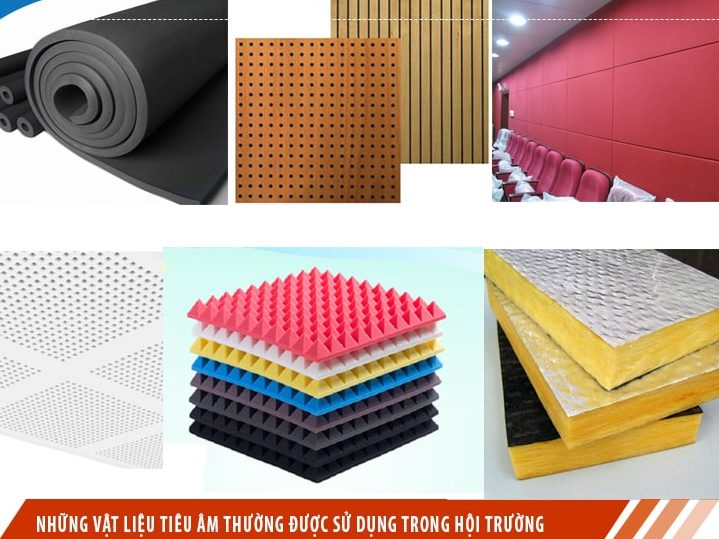
From the explanations above, we understand that sound-absorbing materials allow sound to easily enter and pass through them. The materials used to make sound-absorbing materials need to be porous (with many holes), loose, and air-permeable. Their structure consists of materials with a large number of interconnected microscopic pores, providing a certain degree of air permeability. Common sound-absorbing materials include egg-crate foam, pyramid foam, mineral wool, glass wool, Ecowhite wool, and Sonic acoustic panels.
Sound insulation materials focus on the amount of sound energy passing through to the other side, with the aim of minimizing the sound energy that passes through. In buildings, to achieve the best and most effective sound insulation, sound insulation should be incorporated from the design and construction stages.
How to combine sound insulation materials and sound-absorbing materials?
The nature of these two types of materials is different, but in typical buildings they are often used together to maximize their effectiveness in reducing unwanted noise.
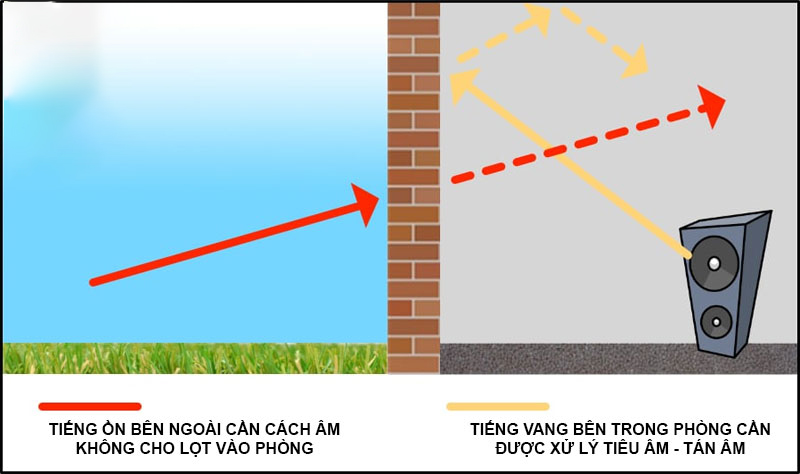
For example: To prevent high-rise noise from affecting neighbors, it is generally necessary to increase the distance between two sound-insulating walls. At this point, applying sound absorption treatment to the ceiling and walls can eliminate a significant amount of unwanted noise.
Sound-absorbing materials and sound insulation materials have recently attracted the attention of many investors and customers. Combining different soundproofing materials can help keep a house quiet,…
See also:
Effective sound insulation solutions for apartment buildings
——Lam Pham Construction Co., Ltd. – LPC
Hotline: 0911.29.9696
Website: https://lpc.vn
Facebook: Lam Pham Construction
Youtube: Lam Pham Construction
Related articles
View all
LONGITUDINAL BENDING COEFFICIENT η OF REINFORCED CONCRETE COLUMNS SUBJECTED TO ECCENTRIC COMPRESSION ACCORDING TO TCVN 5574-2018
According to TCVN 5574-2018, the longitudinal bending coefficient η is a parameter used in the structural calculation of reinforced concrete columns subjected to eccentric…

Directions for improving the quality of social housing today and in the future
On December 1, 2023, the Hanoi Association of Architects organized a discussion session entitled “Planning and Architecture of Social Housing – Present and Future”. At the…
Series on Foundations (Part 1)
Foundations play an important role in every construction project. To have a beautiful and sturdy home, the foundation must be built firmly and safely.
Building sustainable projects together
Follow expert knowledge from LPC engineers or contact us when you need advice.