

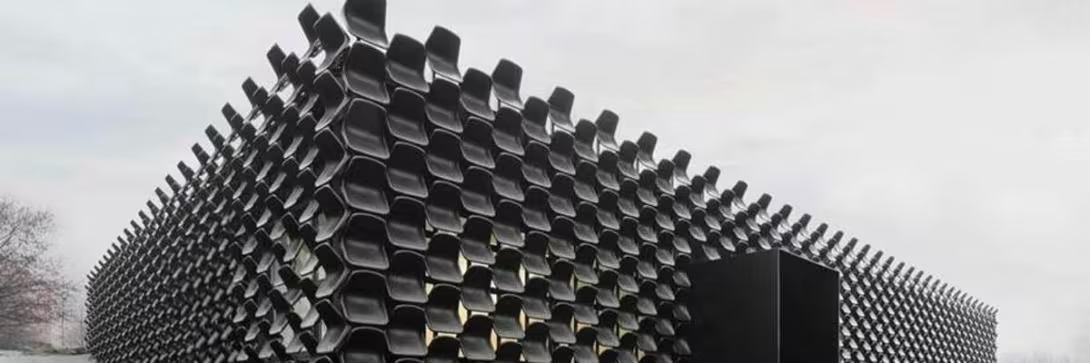
As the climate crisis remains at the forefront of people's minds, the architectural community is also making concerted efforts to improve the built environment. Therefore, the architectural material trends of 2023 also place greater emphasis on environmental responsibility and ethical design. As a result, architects are continuously seeking alternative solutions that use sustainable and innovative materials.
With the development of science and technology, many new materials have emerged. They not only help reduce costs and are environmentally friendly, but also provide more sustainable building structures. Building materials do not merely affect the quality, structure, and aesthetics of a building. They also have significant impacts on the surrounding environment.
In the following article, join LPC to explore the materials that gained momentum in 2023.
1. First Architectural Material Trend – Hempcrete
The first architectural material trend gaining momentum this year and receiving strong support from designers is the use of bio-composite materials such as hempcrete.
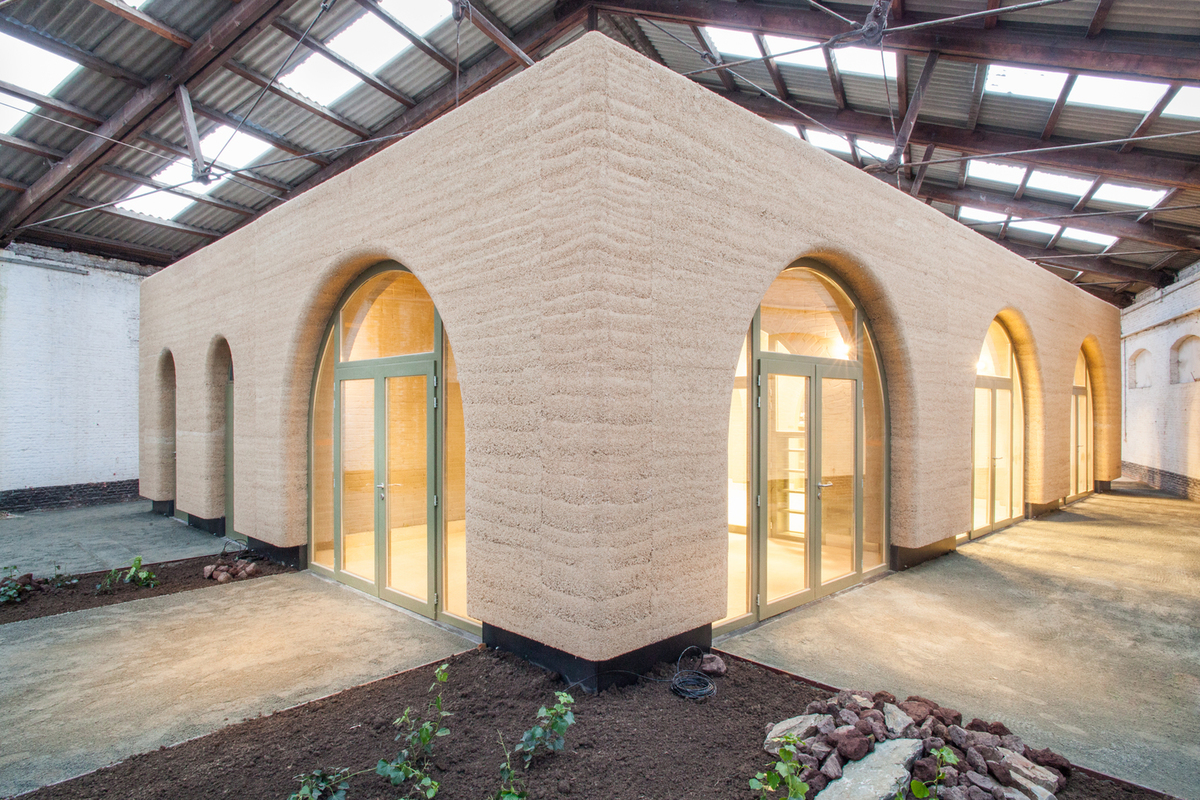
First Architectural Material Trend – Hempcrete
The construction industry is striving to find sustainable alternatives to concrete – one of the most widely used but unsustainable building materials. Many experts also predict that building blocks made from hemp and lime could help shape a better built environment.
Specifically, hempcrete provides strength and thermal insulation similar to traditional concrete, but is half the weight and requires less energy to produce. In addition, hempcrete can be produced more quickly, is easier to handle, and provides excellent insulation.
Moreover, hempcrete can quickly absorb heat and then release it gradually. This makes it suitable for constructing buildings in climates with large temperature differences between day and night. It is also fire-resistant, non-toxic, and resistant to mold and naturally occurring insects.
2. Second Architectural Material Trend – Bamboo
Thanks to its high compressive strength, sustainable qualities, and rapid growth, bamboo has attracted the attention of the architectural community. It is a building material closely associated with Southeast Asia and South America, where the climate is suitable for cultivation.
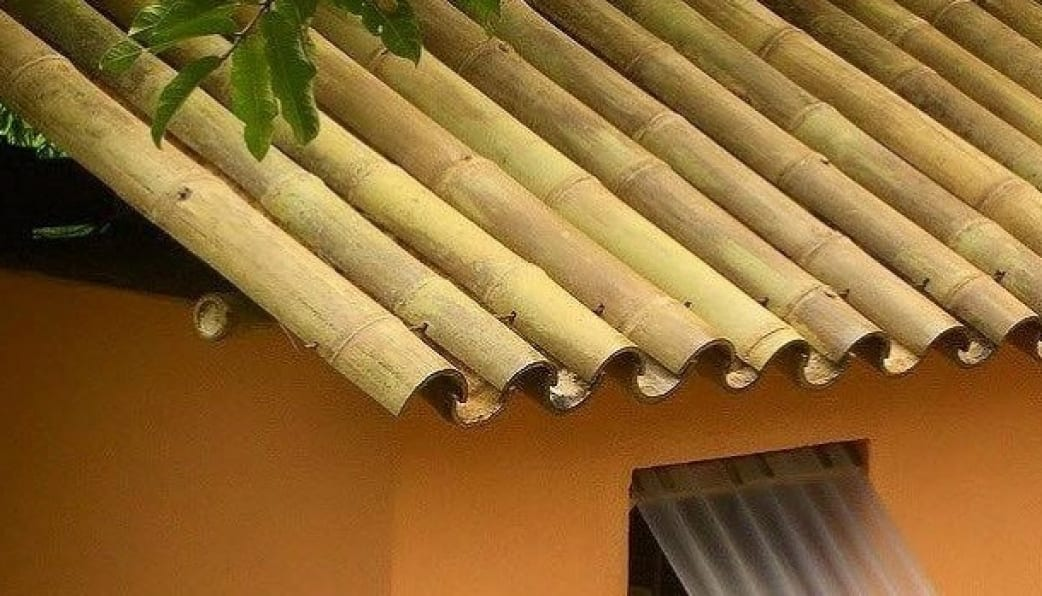
Second Architectural Material Trend – Bamboo
In terms of its positive impact on ecosystems, bamboo releases 30% more oxygen than other plants. It contributes to making the construction industry more environmentally responsible. In addition, bamboo's elasticity and light weight make it an excellent material for sculptures. Many companies have recognized the potential of this material and are working to develop the necessary bamboo treatment methods to extend its lifespan and moisture resistance.
3. Third Architectural Material Trend – Graphene
Graphene was a material that attracted considerable attention in 2023, despite still being in the early stages of research and testing.
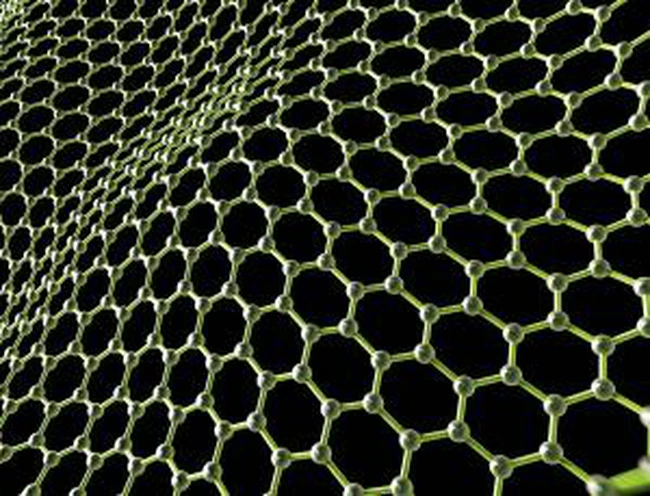
Third Architectural Material Trend – Graphene
Graphene is a flat sheet with a thickness corresponding to a single layer of carbon atoms, with sp2 bonds forming a honeycomb crystal lattice. This is a new building material that is lightweight yet stronger than steel and carbon fiber. Not only is graphene strong, but it is also electrically conductive, capable of absorbing light, and highly antibacterial.
Thanks to these promising properties, scientists have conducted research into the potential of graphene-reinforced composite materials. Graphene is also considered a material that could become a green alternative to concrete. Above all, graphene's electrical conductivity has attracted the attention of architects working in the development of smart cities.
4. Fourth Architectural Material Trend – Microalgae
In 2023, designers reassessed the potential of architecture, moving from static structures toward living ecosystems. Accordingly, architects explored the possibility of using microalgae to generate renewable energy and purify the air.
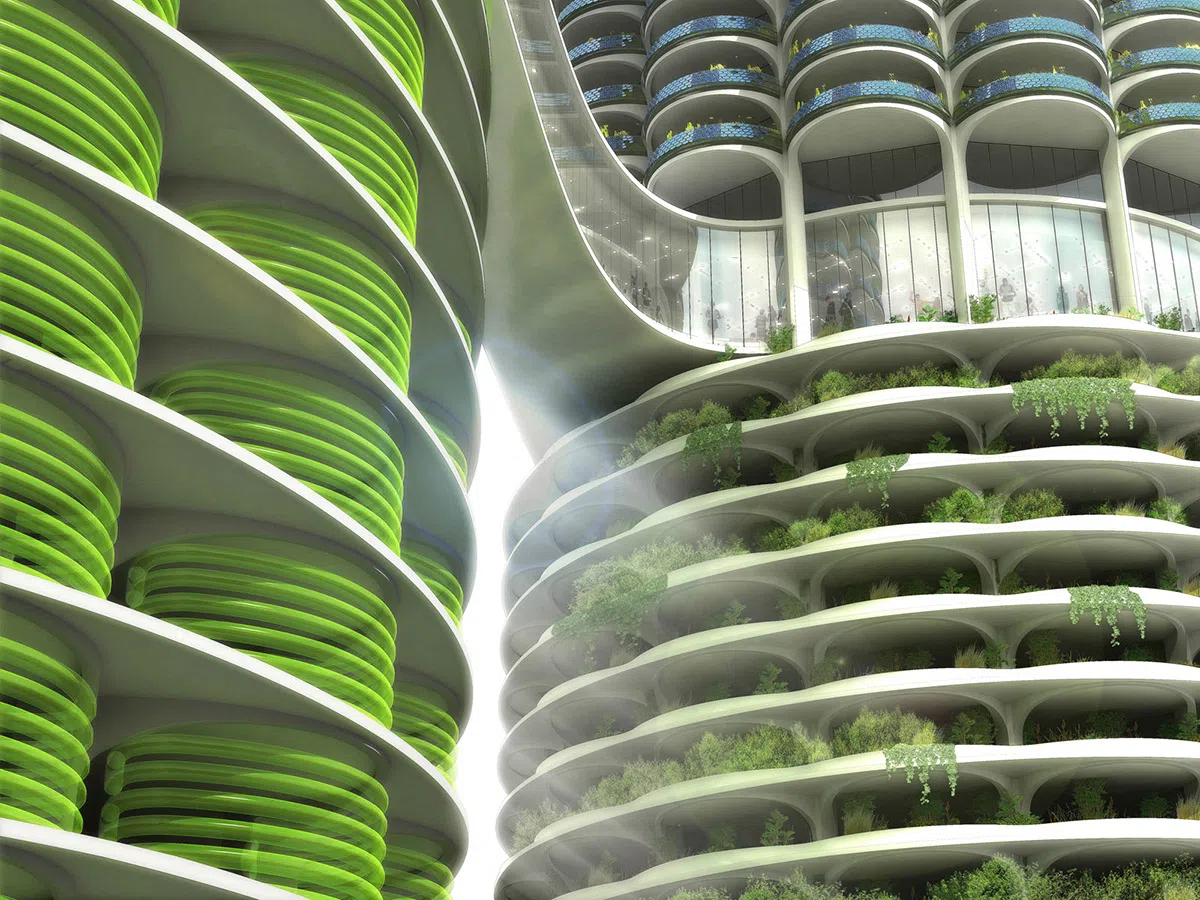
Fourth Architectural Material Trend – Microalgae
Through photosynthesis, microalgae can absorb carbon dioxide and produce oxygen. When integrated into façades, structures can become a means of absorbing carbon and producing biofuels. Therefore, with the deployment of microalgae, the built environment can become a vibrant ecosystem with naturally purified air.
5. Fifth Architectural Material Trend – Insect-Infested Wood
Materials that were once considered unsuitable for construction can now be transformed into viable materials thanks to advances in science and technology. One example is the New York-based experimental design studio HANNAH, which developed a robotic device capable of processing and reusing wood infested by the EAB invasive pest into useful building materials.
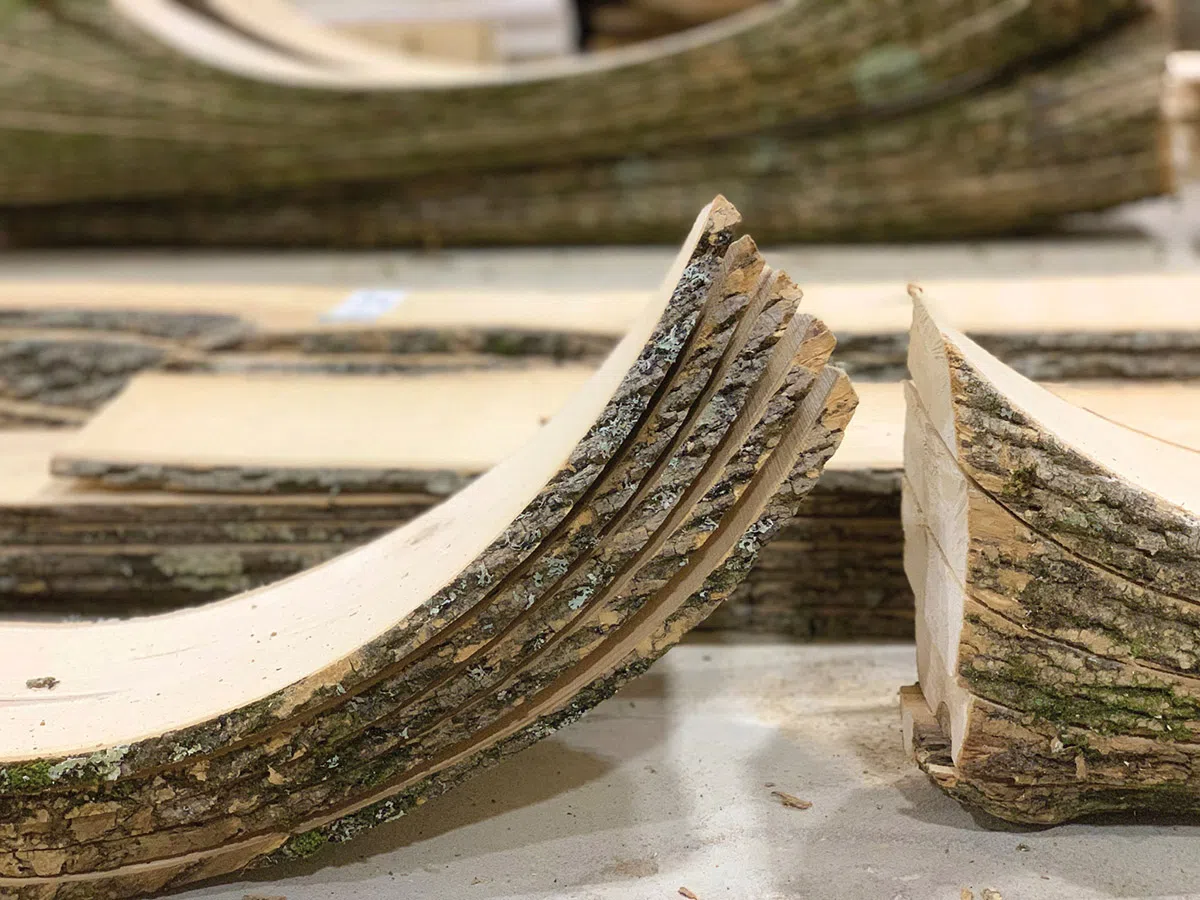
Fifth Architectural Material Trend – Insect-Infested Wood
The emerald ash borer (EAB) is an invasive species that threatens ash trees throughout North America. Faced with the threat of a severely compromised supply of construction-grade timber, finding ways to make use of the billions of infected ash trees is extremely important. This initiative by the HANNAH studio highlights the innovation that can be achieved when technology is prioritized.
Read more: A Look Back at the Architectural Trends Predicted to “Rise to Prominence” in 2023
6. Sixth Architectural Material Trend – Mycelium
Mycelium is a root-like structure made from fungi. When properly dried, it becomes a flexible, durable, and water-resistant material. Sustainability expert David Cheshire has identified this material as a potential direction for the “green” future of the construction industry.
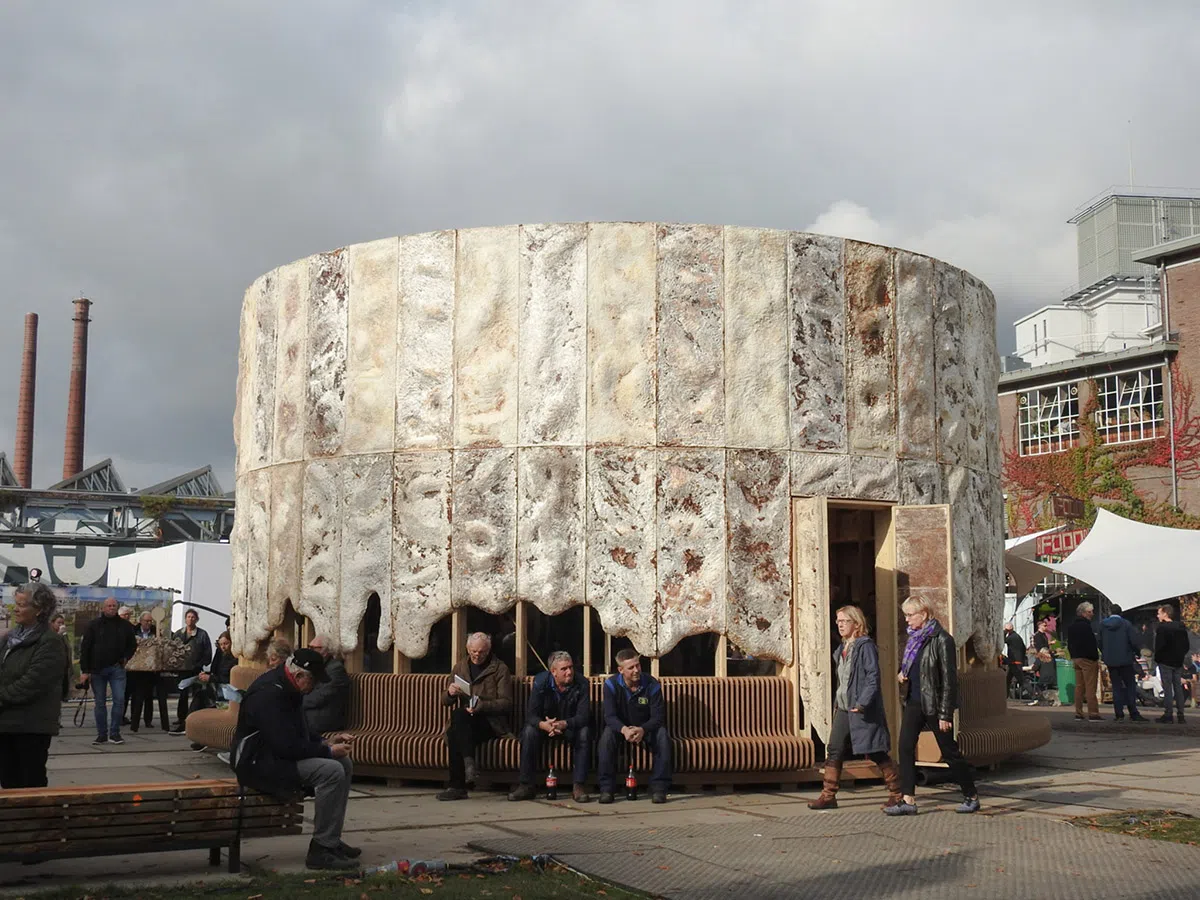
Sixth Architectural Material Trend – Mycelium
Due to its ideal building properties, many researchers have explored the potential of incorporating this material into floor tiles and sculptures. Meanwhile, many architects are also exploring the aesthetics of the material's unique structure in its natural state.
This bio-based material has the potential to become an effective green material trend.
Read more: Explore Office Lighting Trends for the New Era of Work
7. Seventh Architectural Material Trend – Straw
Straw is recognized by construction experts around the world as an environmentally friendly material with excellent thermal insulation properties.
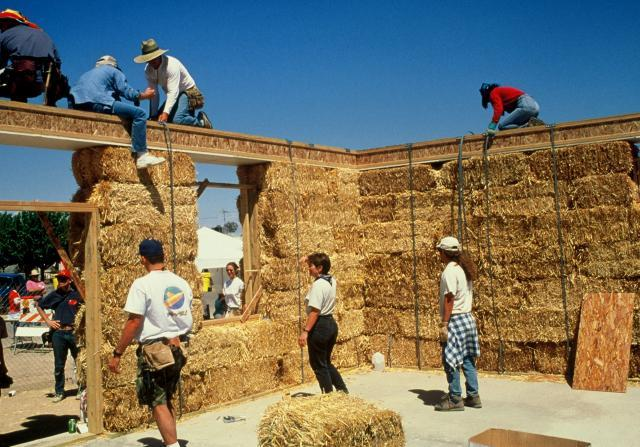
Seventh Architectural Material Trend – Straw
Straw is durable and biodegradable. When properly preserved, it can last for up to a hundred years. Similar to mycelium, straw has not yet been widely used in large-scale production but has shown considerable promise.
Thanks to its availability, straw can be sourced directly from local areas, helping make supply chains and construction processes more sustainable. With proper care and under low-humidity conditions, this material trend can provide effective thermal insulation.
These are the “promising” architectural material trends of 2023 compiled by LPC. We hope this article provides useful information for our readers!
— Lam Pham Construction Co., Ltd. – LPC
Hotline: 0911.29.9696
Website: https://lpc.vn
Facebook: Lam Pham Construction
Youtube: Lam Pham Construction
TikTok: Lam Pham Construction
More articles
All news

Have a project in mind?
LPC engineers are ready to share their experience and propose the right solution for your project.