Ubot Flat Slab – A Green Material Solution for Sustainable Architecture in the Modern Era
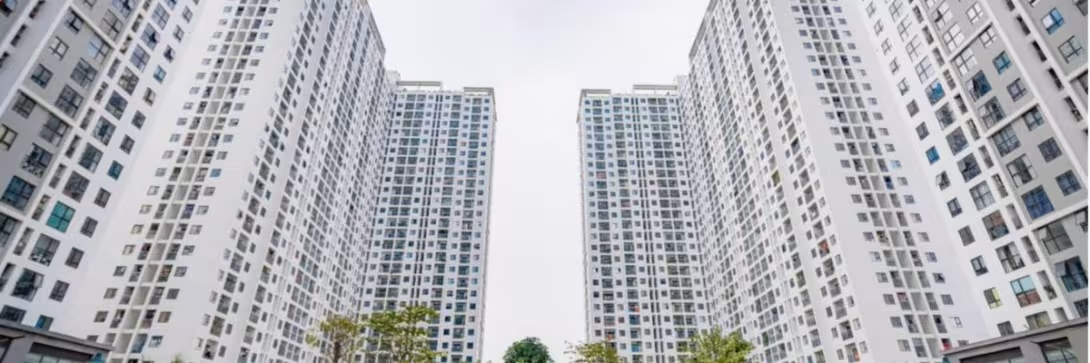
Ubot Flat Slab – A Green Material Solution for Sustainable Architecture in the Modern Era
In an era when climate change has become a global issue, the construction industry – which accounts for a significant share of greenhouse gas emissions and resource consumption – is undergoing a major transformation. Green architecture is no longer a temporary trend but has become an inevitable standard, driving growing demand for environmentally friendly construction materials. Among these, the Ubot flat slab solution has emerged as a breakthrough option, combining economic and technical efficiency with sustainability and paving the way for smart, cost-effective, and nature-friendly buildings.
1. Green Construction Materials – An Inevitable Trend of the Era
According to statistics from the World Green Building Council (WGBC), green buildings can use 26% less energy, reduce CO₂ emissions by 33%, and save up to 13% in maintenance costs compared with conventional buildings. These figures have driven investment in design, construction, and material solutions that are renewable, reusable, and environmentally friendly.
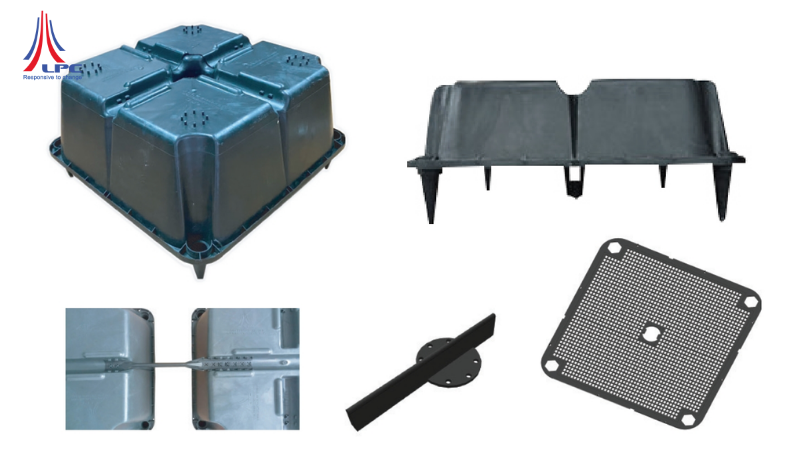
Structure of the Ubot box
In this context, smart materials such as biocement, self-healing concrete, microalgae walls, and even concrete made from coffee grounds are gradually demonstrating their practical applications. However, there is no need to look too far. Right here in Vietnam, a green construction solution has already been widely implemented in practice: the Ubot voided slab – using void-forming formwork made from recycled polypropylene (PP), providing numerous environmental and structural benefits.
2. What Is a Ubot Flat Slab? A Material That Can “Green” Traditional Concrete Slabs
The Ubot flat slab is a voided slab construction solution that uses recycled plastic boxes (Ubot) as void-forming formwork within concrete, replacing a significant portion of solid concrete that contributes little to structural performance around the neutral axis. Ubot boxes have a hollow truncated-cone box shape and are made from recycled polypropylene – a durable, lightweight, and waterproof material.
Instead of using solid concrete throughout – a heavy material associated with high CO₂ emissions – Ubot flat slabs create voids within the slab, reducing structural weight and saving materials while also improving the efficiency of space utilization.
3. Why Is the Ubot Flat Slab a “Green” Construction Material?
Recycling – Reuse – Emission Reduction
Ubot boxes are made from recycled plastic, helping to reduce plastic waste released into the environment. Thanks to its void-forming structure, the Ubot flat slab can reduce 10–30% of the concrete volume, reducing loads on the foundations and structural system. This also means reducing CO₂ emissions from cement and steel production, two major sources of emissions in the construction industry.
Faster Construction and Time Savings
Compared with traditional methods, Ubot flat slab construction is simple and easy to implement. Modular installation of the hollow boxes reduces the time required for cutting and assembling formwork and bending reinforcement, allowing faster construction, reducing labor requirements, and shortening the construction schedule – thereby reducing electricity, water, and energy consumption.
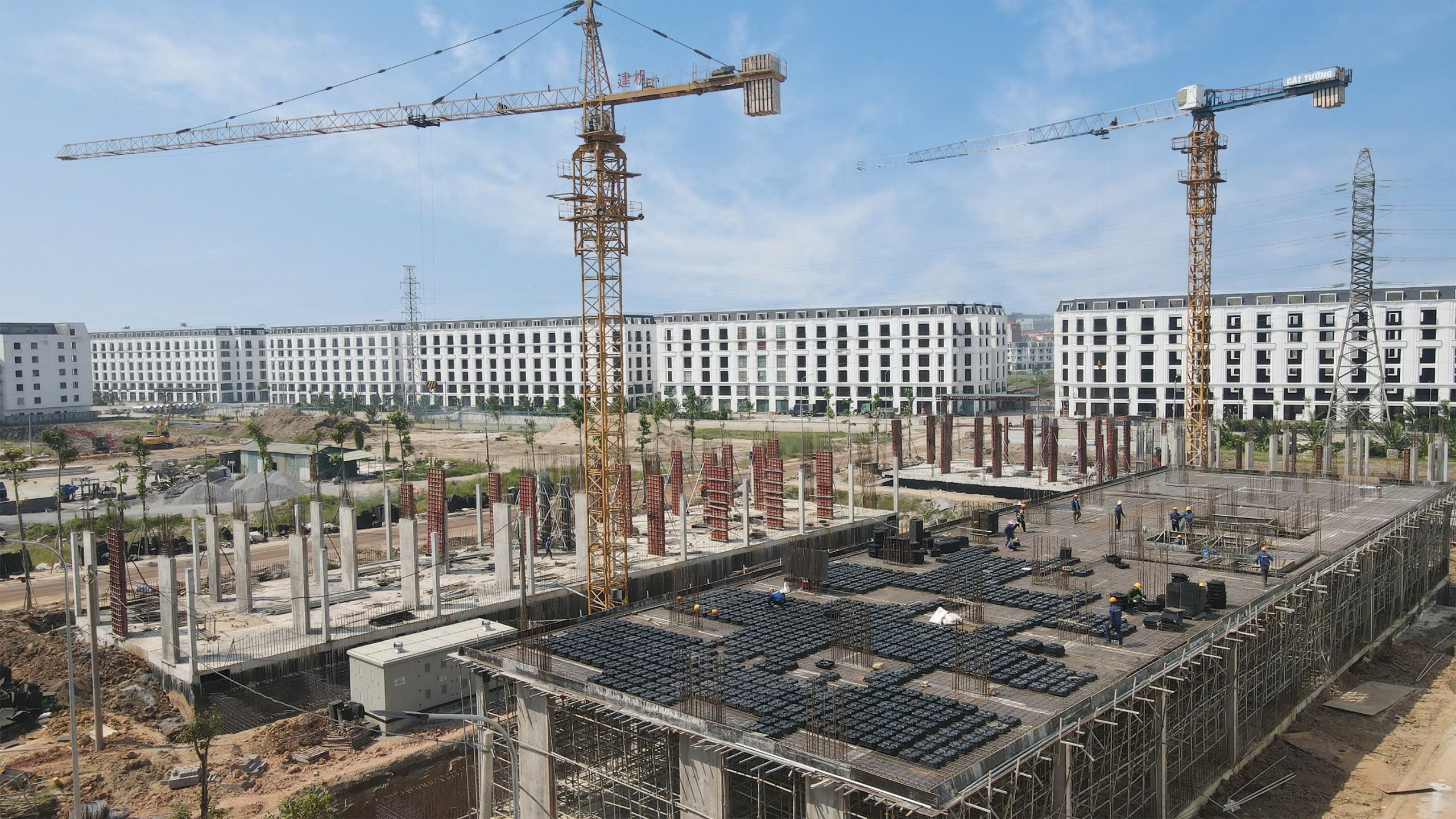
Ubot hollow box slab: Fast construction and time savings
Resource Optimization – Environmental Protection
This solution not only saves materials but also helps reduce the use of timber formwork, limiting the exploitation of forest resources – a practical contribution to protecting the planet.
See also: Ubot Boxes: A Green, Cost-Optimized Solution for Sustainable Construction
4. Technical Advantages – Superior in Both Quality and Functionality
Not only “green”, Ubot flat slabs also effectively meet the stringent technical requirements of modern buildings:
- Increase slab spans (up to 15 m without secondary beams)
- Reduce overall slab height, increasing usable area, especially in high-rise buildings or parking facilities
- Reduce building loads, thereby saving foundation and column costs
- Improve sound and thermal insulation thanks to the internal hollow structure, helping reduce energy consumption during operation and use.
5. Ubot Flat Slabs in Green Buildings – Practical Applications and Trends
Today, Ubot flat slabs are widely used in buildings that meet green standards (LEED, Lotus, EDGE, etc.), such as:
- Schools and hospitals – where sustainability and energy efficiency are highly valued
- High-rise apartment buildings – optimizing usable area and structural loads
- Industrial facilities and warehouses – requiring large spaces and high load-bearing capacity.
- Green architectural projects – emphasizing “eco-friendly” principles in design and construction
 Green building project – Ecohome Phuc Loi using Ubot hollow box slabs
Integrating Ubot flat slabs helps investors more easily achieve green building criteria in project documentation while also reducing long-term operating costs.
6. Ubot Flat Slabs – Green Materials for a Sustainable Future
In the context of the construction industry seeking environmentally friendly, safe, and cost-effective material solutions, Ubot flat slabs are not only a technical solution but also an answer to the global race toward green construction materials.
From recyclability and emission reduction to cost optimization – Ubot flat slabs meet all the criteria of sustainable construction materials for the 21st century.
If you are looking for a slab solution that is both effective and environmentally friendly for your project, Ubot is a solution worth investing in today – for a sustainable future tomorrow.
Related articles
View all
Long-span flat slabs in modern architecture
Long-span flat slabs – where architects create sophisticated architectural beauty. Architectural beauty is understood as the organization and arrangement of spaces with functional…

Green materials and economic efficiency in construction – Can they go hand in hand?
Today, a popular trend being adopted by the construction industry both globally and domestically is the production of environmentally friendly construction materials using new…

ECONOMIC AND TECHNICAL EFFICIENCY OF FLAT SLABS COMPARED TO TRADITIONAL SLABS
Today, voided slabs, lightweight concrete slabs, also known as flat slabs, have established their position compared to traditional concrete slabs. With advantages in architecture,…
Building sustainable projects together
Follow expert knowledge from LPC engineers or contact us when you need advice.