The transformation of the construction materials industry in 2020
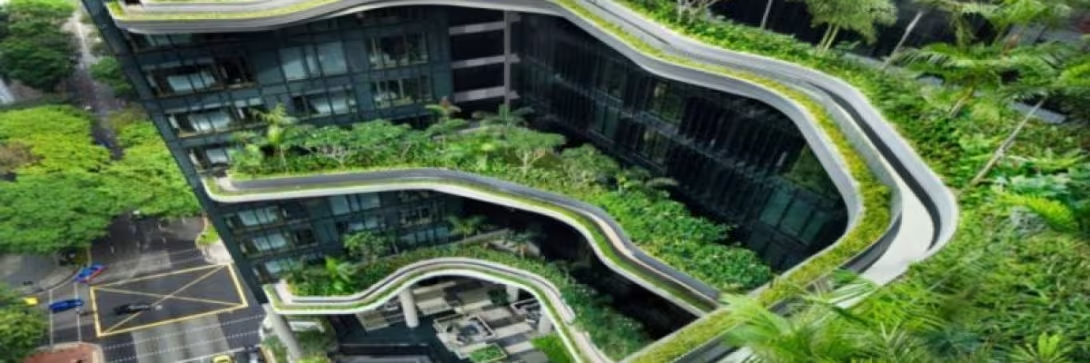
New construction materials – The foundation for “Recreating” the construction industry
When talking about construction materials, people often immediately think of materials such as sand, gravel, concrete… However, with the rapid development of science and technology, especially in the construction industry, traditional construction materials are gradually being replaced by new construction materials, promising to bring an entirely new look to the construction industry. The use of these materials will help people address many issues related to construction processes, quality, durability, budget, and environmental impacts.
1. Some new construction materials currently available on the market
a. Balsa carbon fiber
Balsa wood is known as an extremely lightweight yet very strong material. However, balsa wood is difficult to produce, making this material very expensive. A group of researchers at Harvard University created a composite material (a material made from two or more different materials) with an unprecedentedly low weight and exceptional stiffness that could replace balsa wood.
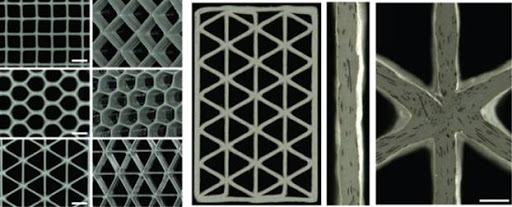
The final result is a product capable of completely replacing balsa wood, not only at a lower cost but also by eliminating the issues found in conventional wood structures, such as irregular particles and difficulties in use for precise structural applications.
b. Green concrete
A research group from Universiti Teknologi MARA in Malaysia created a new type of concrete called “Green Concrete” by using conventional concrete aggregates mixed with suitable waste and other recycled materials.
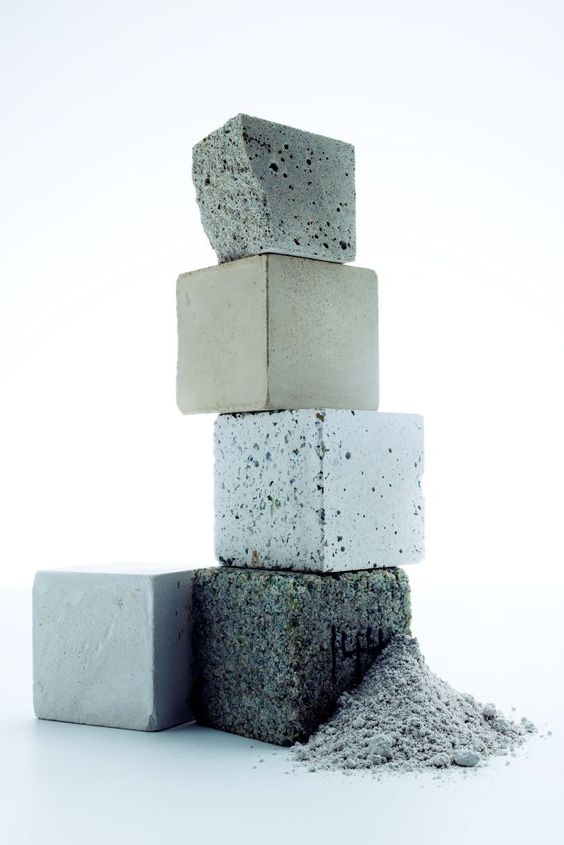
Green concrete still ensures the quality and strength of conventional concrete while making use of waste and recycled materials such as fly ash, recycled concrete aggregates, synthetic fiber aluminum, etc., helping reduce environmental pollution.
c. Lightweight concrete
This product is manufactured using autoclaved aerated, non-fired technology. Lightweight concrete is used to produce blocks, floor and roof panels, and wall panels. The product’s aggregates are made from sand, water, lime, and cement, mixed with aluminum powder and additives and poured into molds. The mixture then undergoes a physicochemical reaction that causes expansion and creates air pockets inside, resulting in a highly porous product.

The advantages of this product include being less than half the weight of fired clay bricks, saving foundation costs, providing good thermal and sound insulation, and offering fire resistance. Although its price is 10–15% higher than conventional bricks, it can save significantly on other overall costs and is environmentally friendly.
d. Recycled tiles
These tiles are manufactured from broken and waste tiles generated during production. The products undergo special processing technology to produce tiles using 50–100% “construction waste” materials. These tiles still meet technical and aesthetic requirements and can even be produced in large sizes.
e. UBOT slabs made from recycled plastic
UBOT beamless flat slabs are a solution that uses UBOT void-forming boxes to replace non-load-bearing concrete areas within the slab. This product is manufactured by Lam Pham Construction Co., Ltd. from recycled Polypropylene using a modern production line.
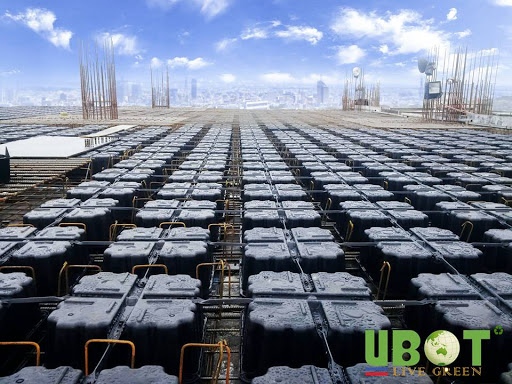
This solution helps reduce slab weight by 10%–30%, improve sound and thermal insulation, and save 10%–15% of total construction costs. UBOT slabs simultaneously address three key issues: product quality, budget optimization, and environmental protection.
Green construction materials are becoming an inevitable trend in the construction industry. Applying science and technology in combination with recycled raw materials will create high-quality and environmentally friendly products. LPC believes that it is entirely feasible to develop the economy while simultaneously protecting the environment.
Related articles
View all
Long-span flat slabs in modern architecture
Long-span flat slabs – where architects create sophisticated architectural beauty. Architectural beauty is understood as the organization and arrangement of spaces with functional…

Green materials and economic efficiency in construction – Can they go hand in hand?
Today, a popular trend being adopted by the construction industry both globally and domestically is the production of environmentally friendly construction materials using new…
ECONOMIC AND TECHNICAL EFFICIENCY OF FLAT SLABS COMPARED TO TRADITIONAL SLABS
Today, voided slabs, lightweight concrete slabs, also known as flat slabs, have established their position compared to traditional concrete slabs. With advantages in architecture,…
Building sustainable projects together
Follow expert knowledge from LPC engineers or contact us when you need advice.