Lightweight construction materials and new challenges for the future of the construction industry

The use of lightweight construction materials is currently one of the new choices for investors, with the main purpose of reducing the load on buildings.
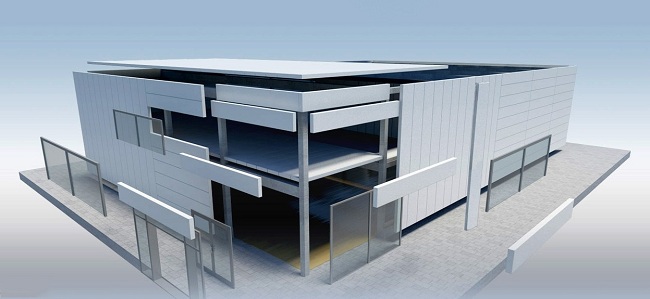
So, what are the characteristics of lightweight construction materials? And what challenges will they pose to the construction industry in the future? Can they help replace traditional materials and save the raw materials needed for the construction process? Let's learn more in the article below!
1. Where do lightweight construction materials come from?
Along with the development of modern urban areas, the use of materials that consume less energy and help conserve natural resources is becoming a development direction for the future of the construction industry. Among these, the green construction trend stands out, using lightweight materials while still ensuring load-bearing capacity and durability.
Researchers have tested many materials, including sand, cement, and even agricultural waste such as young coconut fiber, to create sustainable raw materials. Research indicates that these materials are suitable for constructing walls and roofs, helping save energy and address waste-related issues.
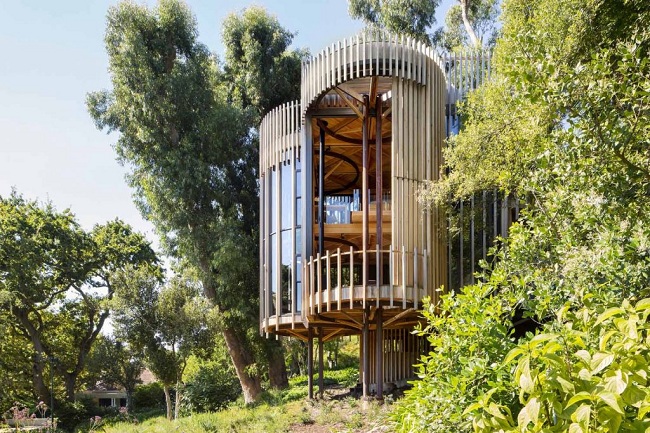
Inspiration from nature: Engineers often draw inspiration from nature, medicine, and everyday life. For example, researchers at the Karlsruhe Institute of Technology (Germany) have developed lightweight materials based on the structure of human bones (frame structure) and honeycombs (strong, lightweight shell structure).
When tested in applications, these materials have a lower density than water, but their strength-to-weight ratio is higher than that of aluminum or steel. Their internal hollow structures (such as honeycombs) help reduce weight while still ensuring load-bearing capacity.
2. Greater challenges for lightweight construction materials in the future
Despite their many advantages, lightweight construction materials still face major challenges, particularly fire resistance.

To address this issue, solutions such as increasing the use of automatic sprinkler systems are essential. In addition, the concept of "lightweight construction" has not yet been officially and strictly defined by international building codes, leading to various design approaches and potential risks if not carefully studied.
3. What types of lightweight construction materials are currently being used?
Below are some common solutions and materials:
- ✅ Aluminum roof structures: Replacing wooden roof structures to reduce the overall weight.
- ✅ Polystyrene (EPS) panels: Used as partitions instead of concrete or brick walls to optimize weight.
- ✅ Carbon fiber: A new material expected to offer long-term efficiency and flexibility.
- ✅ Decra/steel roofing sheets: Lighter than clay tiles, with low maintenance costs and good durability.
- ✅ 3D printing: New technology that enables the creation of lightweight structures with virtually unlimited possibilities.
- ✅ Recycled plastic (Ubot slab): Using recycled Polypropylene to create hollow boxes (Ubot). These boxes are placed between two layers of reinforced concrete, helping reduce slab weight, increase load-bearing capacity, and enhance aesthetics.
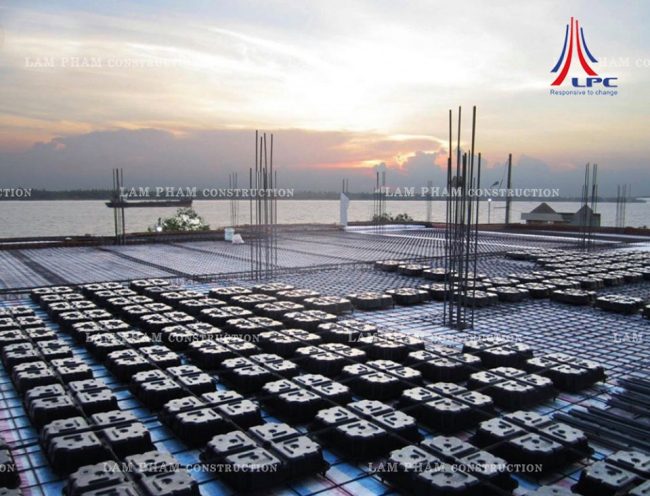
In addition, natural materials such as wood, bamboo, reed, coconut fiber, and others are also being researched for application. The use of lightweight construction materials not only helps reduce building loads but also contributes to environmental protection, limits industrial waste, and minimizes the impacts of climate change.
Related articles
View all
Long-span flat slabs in modern architecture
Long-span flat slabs – where architects create sophisticated architectural beauty. Architectural beauty is understood as the organization and arrangement of spaces with functional…

Green materials and economic efficiency in construction – Can they go hand in hand?
Today, a popular trend being adopted by the construction industry both globally and domestically is the production of environmentally friendly construction materials using new…

ECONOMIC AND TECHNICAL EFFICIENCY OF FLAT SLABS COMPARED TO TRADITIONAL SLABS
Today, voided slabs, lightweight concrete slabs, also known as flat slabs, have established their position compared to traditional concrete slabs. With advantages in architecture,…
Building sustainable projects together
Follow expert knowledge from LPC engineers or contact us when you need advice.