Analysis of Concrete Slab Cracking in Current Construction Projects
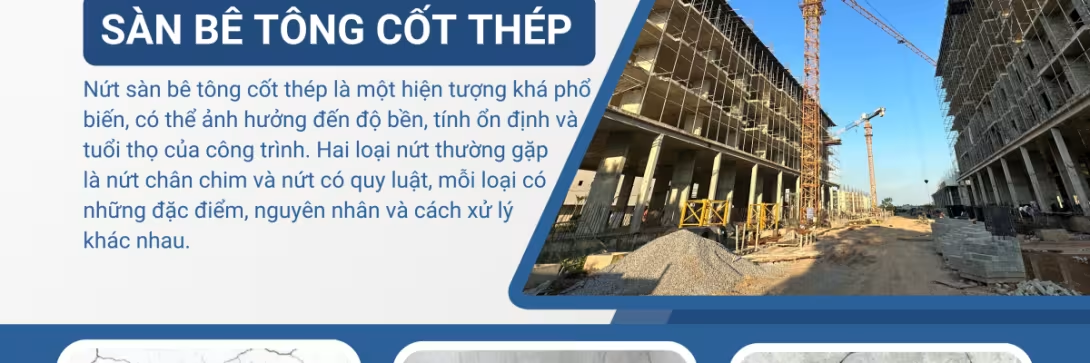
Analysis of Concrete Slab Cracking in Current Construction Projects
Cracking in reinforced concrete slabs is a relatively common phenomenon that can affect the durability, stability, and service life of a building. Two common types of cracks are hairline cracks and patterned cracks, each with different characteristics, causes, and treatment methods.
1. Reinforced Concrete Slab Cracking in the Form of Hairline Cracks
Characteristics
Hairline cracks typically radiate from a single point, do not follow a specific pattern, and may spread in multiple directions. They are generally not very wide or deep.
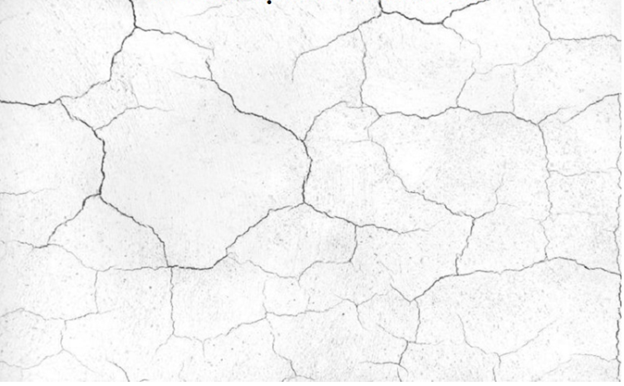 Image of a concrete slab with hairline cracks
Causes
+ Cracking due to shrinkage during concrete hydration when the concrete is not properly cured.
+ Temperature changes: Sudden temperature differences (day and night, sun and rain) cause expansion and contraction, creating internal stresses in the concrete.
+ Mechanical effects: When the material is subjected to high pressure or unexpected loads, hairline cracks may appear.
+ Material quality: The use of substandard or defective materials increases the risk of cracking.
Remedial Measures:
+ Select materials that meet quality standards
+ Use shrinkage-reducing admixtures
+ Proper design by arranging joints and expansion joints to help reduce stress on the surface.
+ Regular monitoring and maintenance
See also: Ubot Flat Slab – A Green Material Solution for Sustainable Modern Architecture
2. Reinforced Concrete Slab Cracking in the Form of Patterned Cracks
Characteristics
Patterned cracks typically appear along a specific direction. They may occur longitudinally through the middle of the slab or extend from one column to another. The cracks may widen considerably.
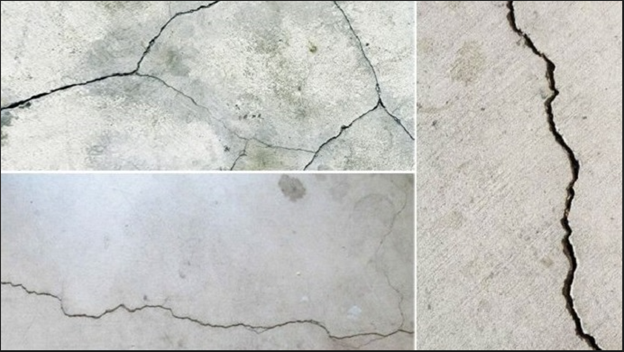 Image of concrete slab cracking in a patterned form
Causes
There are many subjective and objective causes of patterned cracking in concrete slabs. LPC identifies some of the main and common causes of this type of concrete slab cracking:
+ Uneven stress: Uneven load distribution can lead to the formation of cracks.
+ Changes in environmental conditions: Prolonged changes in humidity and temperature can alter stresses within the concrete.
+ Improper construction techniques: Failure to ensure the required concrete cover thickness, or formwork settlement, sinking, or deflection during construction.
+ Inadequate structural design
Remedial Measures
+ Proper structural calculations and design in accordance with standards, with construction carried out in compliance with technical requirements
+ Crack repair: Use specialized materials such as epoxy or mortar to fill the cracks.
+ Periodic maintenance: Conduct regular maintenance to detect and address problems at an early stage.
3. Conclusion
Analyzing and understanding hairline cracks and patterned cracks is very important in the construction industry. Both types of cracks have their own causes and remedial measures; therefore, accurately identifying the type of crack helps determine effective corrective measures and ensure the safety and service life of the building.
Follow more information on the Fanpage: Lam Pham Construction.
Related articles
View all
Long-span flat slabs in modern architecture
Long-span flat slabs – where architects create sophisticated architectural beauty. Architectural beauty is understood as the organization and arrangement of spaces with functional…

Green materials and economic efficiency in construction – Can they go hand in hand?
Today, a popular trend being adopted by the construction industry both globally and domestically is the production of environmentally friendly construction materials using new…

ECONOMIC AND TECHNICAL EFFICIENCY OF FLAT SLABS COMPARED TO TRADITIONAL SLABS
Today, voided slabs, lightweight concrete slabs, also known as flat slabs, have established their position compared to traditional concrete slabs. With advantages in architecture,…
Building sustainable projects together
Follow expert knowledge from LPC engineers or contact us when you need advice.