
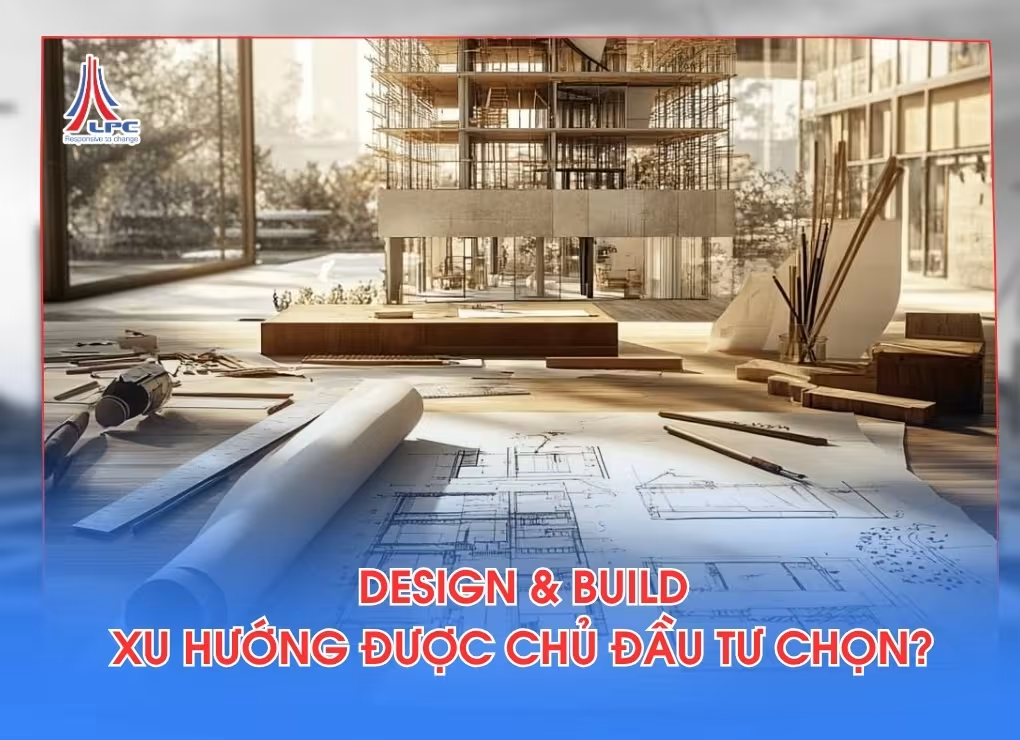
The Design & Build (D&B) model effectively eliminates the risks of schedule delays, budget overruns, and the shifting of responsibility often associated with traditional approaches, thanks to its "single point of contact" mechanism. By consolidating accountability under one entity—from initial concept to final handover—LPC mang đến giải pháp D&B tích hợp công nghệ xây dựng hiện đại, giúp chủ đầu tư tối ưu chi phí, đảm bảo chất lượng và tiến độ vượt trội.
Design & Build là gì?
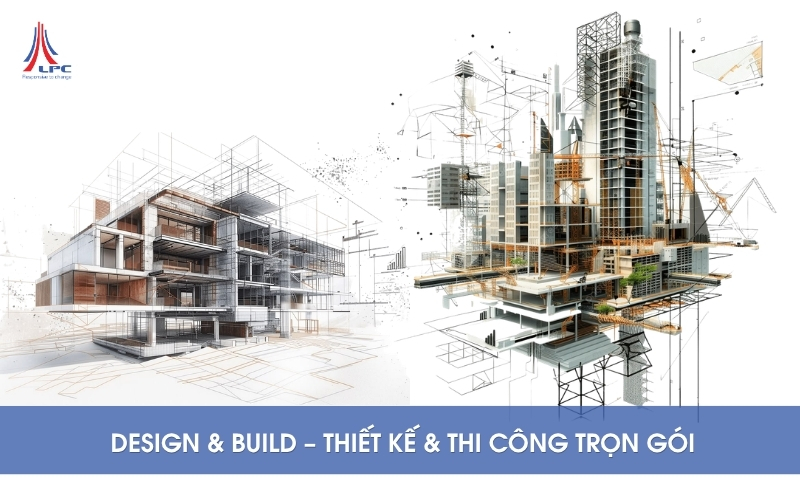
Design & Build (D&B) is a modern project delivery method in which a single general contractor assumes responsibility for all project phases—ranging from master planning consultancy, architectural and engineering design, and material procurement to final construction and project handover.
The core essence of Design & Build lies in the "Single Point of Responsibility" mechanism. Centralizing accountability to a single entity eliminates ambiguity regarding the division of duties between the design and construction teams, thereby ensuring absolute consistency throughout the project's execution.
In a market that demands strict adherence to schedules and efficient cash flow management, Design & Build has become a standard delivery method. It is widely adopted in Vietnam and globally across a diverse range of projects, including industrial facilities, apartment complexes, and office buildings, as well as large-scale mixed-use commercial developments.
The difference between Design-Build and the traditional model
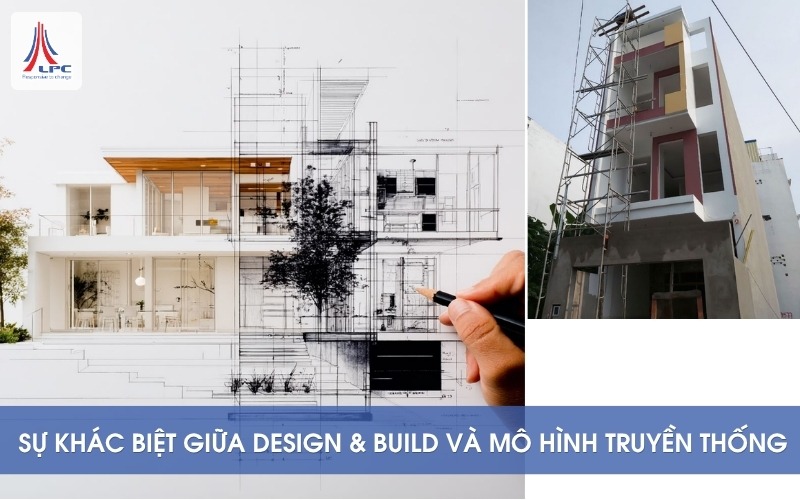
To clearly understand why Design-Build is gradually replacing the traditional model (Design-Bid-Build), let us directly compare the core criteria that impact project efficiency:
| Criteria | Traditional Model (Design-Bid-Build) | Design & Build (D&B) Model |
| Management Point of Contact | Separation between the design firm and the construction contractor increases the administrative workload for the project owner. | A single general contractor bears comprehensive responsibility for everything from design drawings to site execution. |
| Cohesion | Prone to disagreements and the shifting of responsibility when technical errors or on-site issues arise. | Absolute alignment; construction solutions are factored in right from the design stage. |
| Implementation Timeline | Sequential process (Design -> Bidding -> Construction) extends the overall project schedule. | Parallel implementation; site preparation and material procurement can begin as soon as the basic design is approved. |
| Cost Risk | Cost spikes due to drawing revisions or conflicts between the design and actual site conditions. | Budget controlled from the outset through fixed unit prices and realistic construction estimates. |
The primary distinction of the Design-Build method lies in the elimination of the gap between design consultancy and execution. This integration optimizes resources, alleviates management burdens for the project owner, and ensures the project is completed in accordance with commitments.
See more: Smart materials - An inevitable trend for the future construction industry
5 Major Benefits of Design-Build for Project Owners
It is no coincidence that the Design & Build model has become a top priority for modern businesses and investors. This approach effectively addresses key risk-related challenges thanks to five outstanding advantages:
Shorten the implementation schedule by 15%–30%
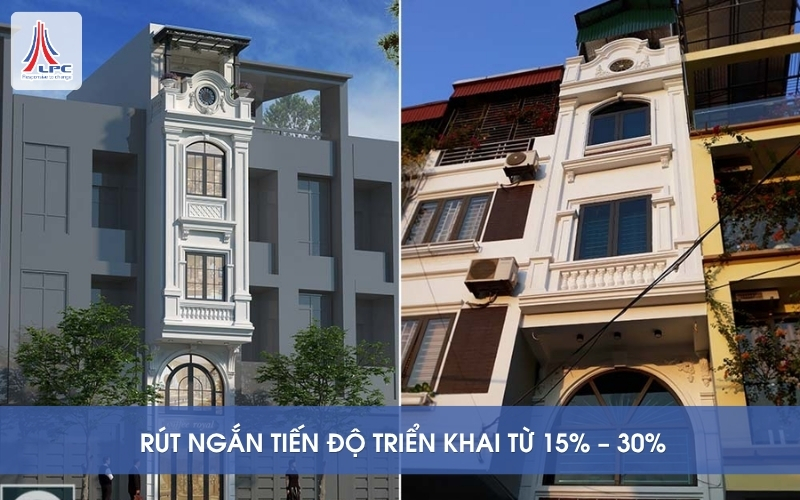
Unlike the traditional sequential approach, the Design-Build method allows for the overlapping of design and construction phases. Once the basic architectural plan is approved, the general contractor can immediately proceed with site preparation, pile driving, or ordering long-lead materials. This proactive approach significantly shortens the overall project completion time.
Control costs and optimize cash flow
The Design-Build model ensures financial transparency right from the project planning stage. Since the general contractor handles direct execution, cost estimates are accurately calculated based on market rates and actual technical specifications. The project owner agrees on a committed lump-sum cost, thereby completely eliminating the risk of unplanned expenses and facilitating effective cash flow management.
Eliminating conflicts between design and construction.
The most common risk associated with the traditional model is the disconnect between design drawings and actual site execution, or the tendency to shift blame when errors arise. With the Design-Build approach, however, architects and construction engineers belong to the same organization and communicate directly to devise the most feasible implementation solutions, ensuring absolute consistency.
Optimize technical solutions from the very beginning.
The construction engineering team is deeply involved in the design conceptualization phase to provide advice on optimal technologies, materials, and structural solutions (such as flat-slab systems or post-tensioned concrete...). This approach ensures high aesthetic appeal while maintaining structural integrity, optimizing material usage, and facilitating future maintenance.
Strengthen comprehensive quality control
Instead of overseeing multiple separate parties, the project owner deals with a single point of contact. The Design & Build general contractor bears full legal and technical responsibility for the entire project, covering everything from site surveys and input materials to the quality of the final finish.
Types of projects best suited for the Design-Build model
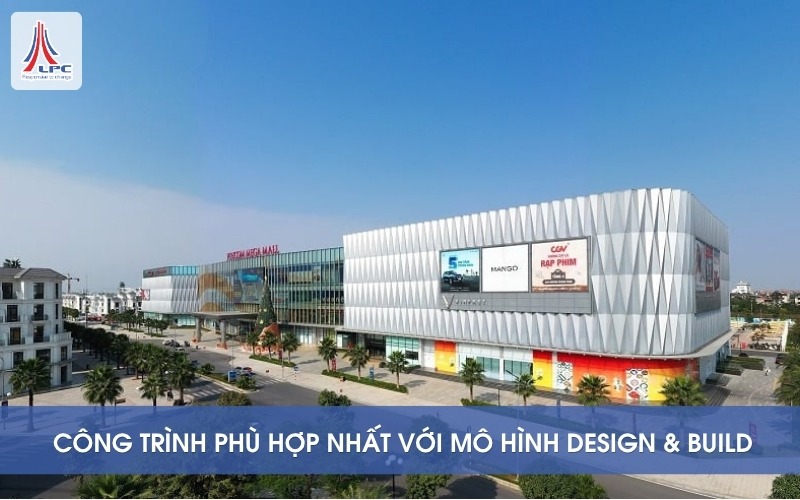
Despite delivering superior results, the Design-Build method is particularly effective in maximizing functionality and economic value for the following types of projects:
- Office Buildings & Commercial Centers: These projects demand rapid progress to enable early operational launch and revenue generation. The Design & Build model optimizes usable space and accelerates the return on investment.
- Factories & Industrial Facilities: These require strict adherence to technical standards, precise steel structure erection processes, and timely handover. The D&B approach ensures technical consistency and allows production lines to become operational according to schedule.
- High-rise Residential Buildings & Hotels: Large-scale projects requiring seamless integration of structural solutions, architectural design, and complex mechanical, electrical, and plumbing (MEP) systems.
- Medium- to Large-scale Private Projects: An ideal solution for developers seeking to streamline internal project management while maintaining effective control over quality, schedule, and budget.
LPC – Design-Build model combined with a construction platform
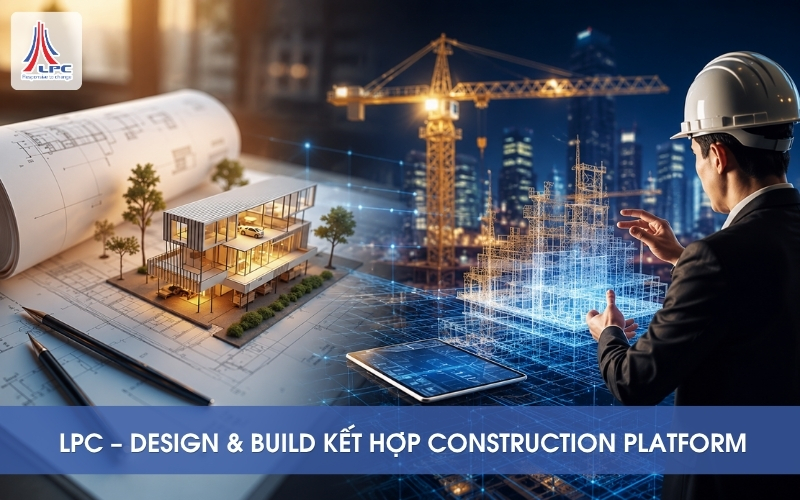
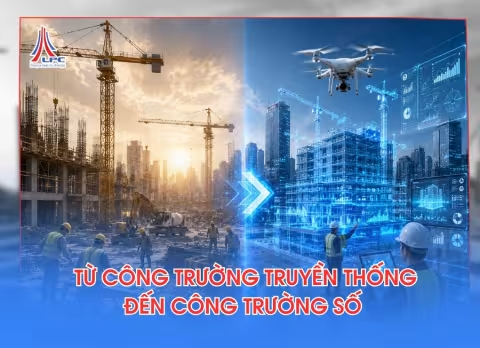
Setting itself apart from traditional contractors, LPC positions itself as a pioneer in integrating construction technology into the Design-Build model, delivering comprehensive and optimal solutions for every project.
- Superior core capabilities: LPC integrates modern technology into its entire operational process. The application of the BIM (Building Information Modeling) model, combined with a Common Data Environment (CDE), enables project digitization, information transparency, and the detection of technical clashes as early as the design stage.
- Optimal structural solutions: LPC has mastered advanced construction technologies, such as the Ubot voided slab system. This solution reduces the structure's dead load, allows for flexible space partitioning, and saves the developer 10%–15% in concrete and
- Sustainable operational philosophy: With technology as its core foundation, LPC is committed to data transparency, ensuring construction schedules are met, and maintaining long-term structural quality.
By perfectly combining the Design & Build model with advanced construction technology, LPC serves as a trusted strategic partner, helping developers transform complex concepts into efficient, cost-optimized projects.
Design & Build has evolved from a fleeting trend into a modern construction standard, enabling comprehensive optimization of time, cost, and quality across all projects. Selecting a reputable general contractor relieves developers of complex management burdens and ensures the most efficient realization of their projects.
Leveraging advanced construction technology platforms and modern management practices, LPC is proud to be a trusted strategic partner, ready to collaborate with developers in creating optimized, sustainable projects that appreciate in value over time.
Contact information:
Fanpage: Lam Pham Construction (LPC)
Hotline: 0911.299.696
Bài viết khác
Tất cả tin tức
Bạn có dự án cần tư vấn?
Đội ngũ kỹ sư LPC sẵn sàng chia sẻ kinh nghiệm và đề xuất giải pháp phù hợp cho công trình của bạn.